Skin condition · Dubai
Melasma Treatment in Dubai
Melasma is one of the most stubborn pigmentation conditions — and one of the easiest to make worse with the wrong treatment. At our Dubai clinic a Specialist Dermatologist diagnoses the pattern and its triggers first, then builds a careful, staged plan around your skin type.
- First step
- Dermatologist diagnosis
- Plan
- Staged, multi-modal
- Downtime
- Minimal, by design
- Horizon
- Managed over months
What Is Melasma?
Melasma is a chronic pigmentation condition that shows as symmetrical brown or grey-brown patches — most often on the cheeks, forehead and upper lip — driven by sun exposure, heat, hormones and genetic predisposition.
Unlike ordinary sun spots, melasma behaves like a chronic condition: it flares with triggers and settles with control, rather than being removed once and gone. The pigment sits in the epidermis, the dermis or both, and the deeper it sits, the more gradual the response to treatment tends to be.
That distinction matters because it changes what success looks like. Melasma treatment in Dubai is judged on how quiet the pigment stays between visits, not on how fast a patch fades once. It sits within the wider family of hyperpigmentation concerns, but it is diagnosed and treated differently from the rest of them — which is why the diagnosis has to come first.
What Causes Melasma?
Melasma is driven by pigment-producing cells that have become over-reactive, and several triggers usually act together rather than alone. The most common are ultraviolet and visible light, heat, hormonal change — pregnancy, hormonal contraception, hormone therapy — a genetic predisposition, and skin inflammation from irritating products or overly aggressive treatment.
Dubai adds pressure at almost every one of those points. Ultraviolet exposure here is significant year-round rather than seasonal, so pigment accumulates without the recovery window that a northern winter provides. Heat and visible light are triggers in their own right, which is why melasma often deepens through the summer months even in people who use sunscreen diligently. Incidental exposure does more damage than most people expect — the drive to work, the walk from the car park, daylight through glass.
This is also why so much melasma care fails: it treats the pigment and ignores the driver. Skin tone tracks broader health and exposure more closely than most people realise, a theme we cover in skin as the biomarker you can see.
Melasma Symptoms: How It Shows Up
Melasma most often affects women, commonly appearing or deepening with pregnancy, hormonal contraception or hormonal change, and it is more persistent in medium and deeper skin tones — skin that is also more easily provoked by aggressive treatment. Men are affected too, less frequently.
It typically appears symmetrically across the cheeks, forehead, bridge of the nose and upper lip. The symmetry is part of what distinguishes it: a single patch on one side, or a mark that is changing in size, shape or colour, is a different conversation entirely.
If a facial pigment patch is new, asymmetric, or changing in an unusual way, a medical assessment matters more than a cosmetic one — diagnosis comes before treatment in every case, and no cosmetic treatment should go near an undiagnosed lesion.
- Symmetrical patches on cheeks or forehead
- Darkening after sun or heat exposure
- Onset with pregnancy or hormonal change
- Pigment that returns after previous treatment
Melasma vs Sun Spots: How to Tell the Difference
The two are routinely confused, and they respond to treatment very differently — which is why treating them interchangeably is how pigmentation care goes wrong. A dermatologist distinguishes them on pattern, history and depth.
| Melasma | Sun spots (solar lentigines) | |
|---|---|---|
| Pattern | Symmetrical patches, both sides of the face, often cheeks, forehead and upper lip. | Discrete, separate spots scattered across sun-exposed areas. |
| Main drivers | Hormones, heat and visible light as well as UV; genetic predisposition. | Cumulative ultraviolet exposure over years. |
| Behaviour | Chronic and trigger-driven — flares and settles rather than clearing once. | Stable once formed; accumulates gradually with further exposure. |
| Response to treatment | Gradual and cautious. Heat-heavy treatment can deepen it, so plans stage up slowly. | Typically responds well and more predictably to peels and light-based treatment. |
| After treatment | Maintenance is part of the plan from the start. | Tends to stay clear in proportion to sun protection afterwards. |
How Is Melasma Treated in Dubai?
Melasma punishes guesswork. Heat-heavy or overly aggressive treatment can inflame the skin and deepen the pigment it was meant to clear, which is why our first step is a dermatologist’s diagnosis of your pattern, depth and triggers — and an honest conversation about maintenance.
The plan is then staged and conservative: trigger control and photoprotection as the foundation, prescription-strength topicals selected by your dermatologist where appropriate, and in-clinic treatments layered in gradually and reviewed as your skin responds. Skin type matters as much as the diagnosis: medium and deeper tones need adapted peel choices, conservative energies and sensible spacing between sessions to avoid trading one form of pigmentation for another.
On melasma laser treatment specifically, we are deliberately cautious. Light-based treatment has a place for some patterns, but it is chosen for a specific skin type and introduced late rather than first — many melasma plans do well without it.
Skin
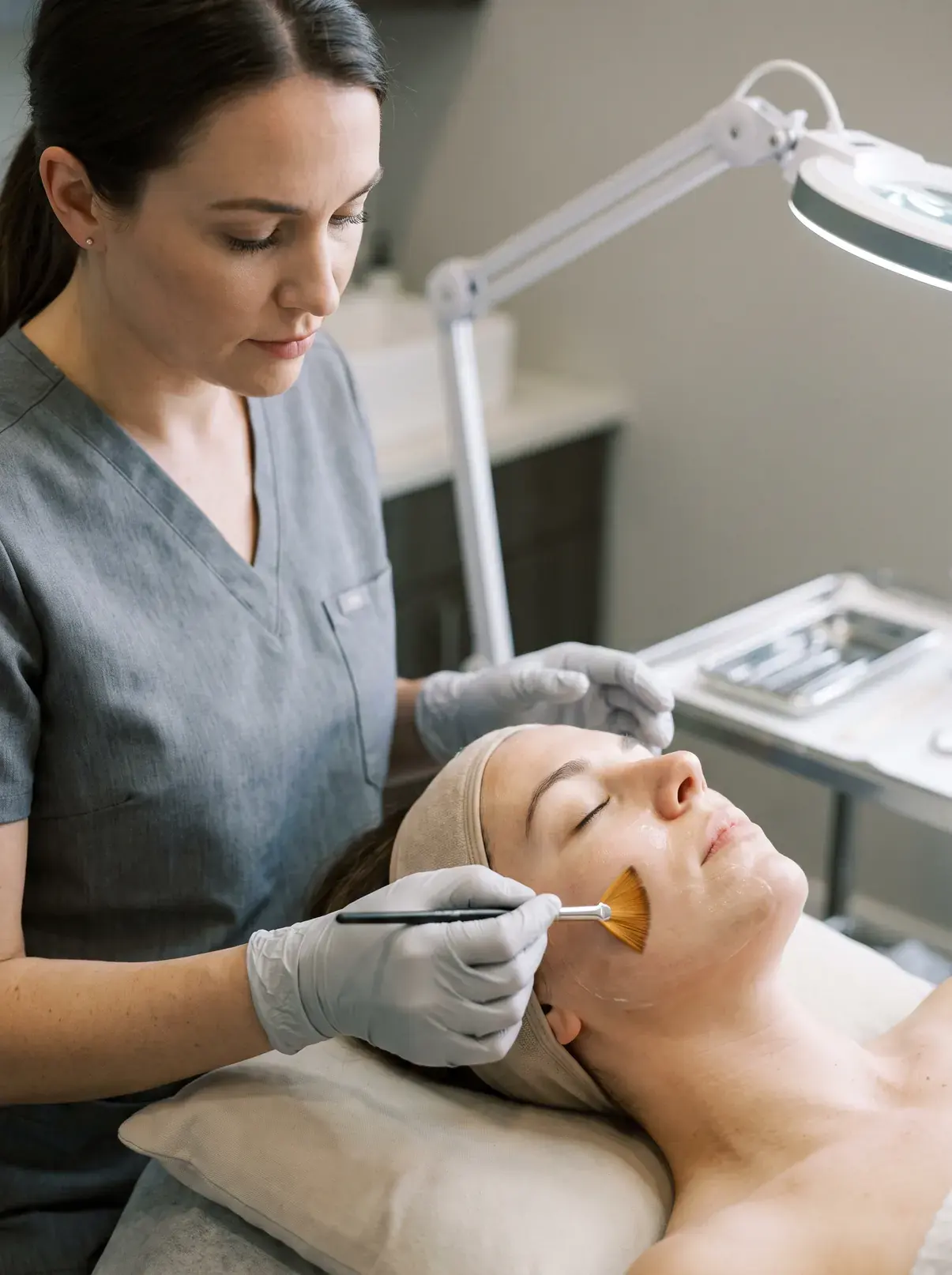
Chemical Peels
Superficial peels selected for pigment-prone skin, built up gradually.
Skin
Mesotherapy
Brightening actives micro-dosed precisely into the affected areas.
Injectables
Skin Boosters
Hydration and barrier support alongside pigment management.
Skin
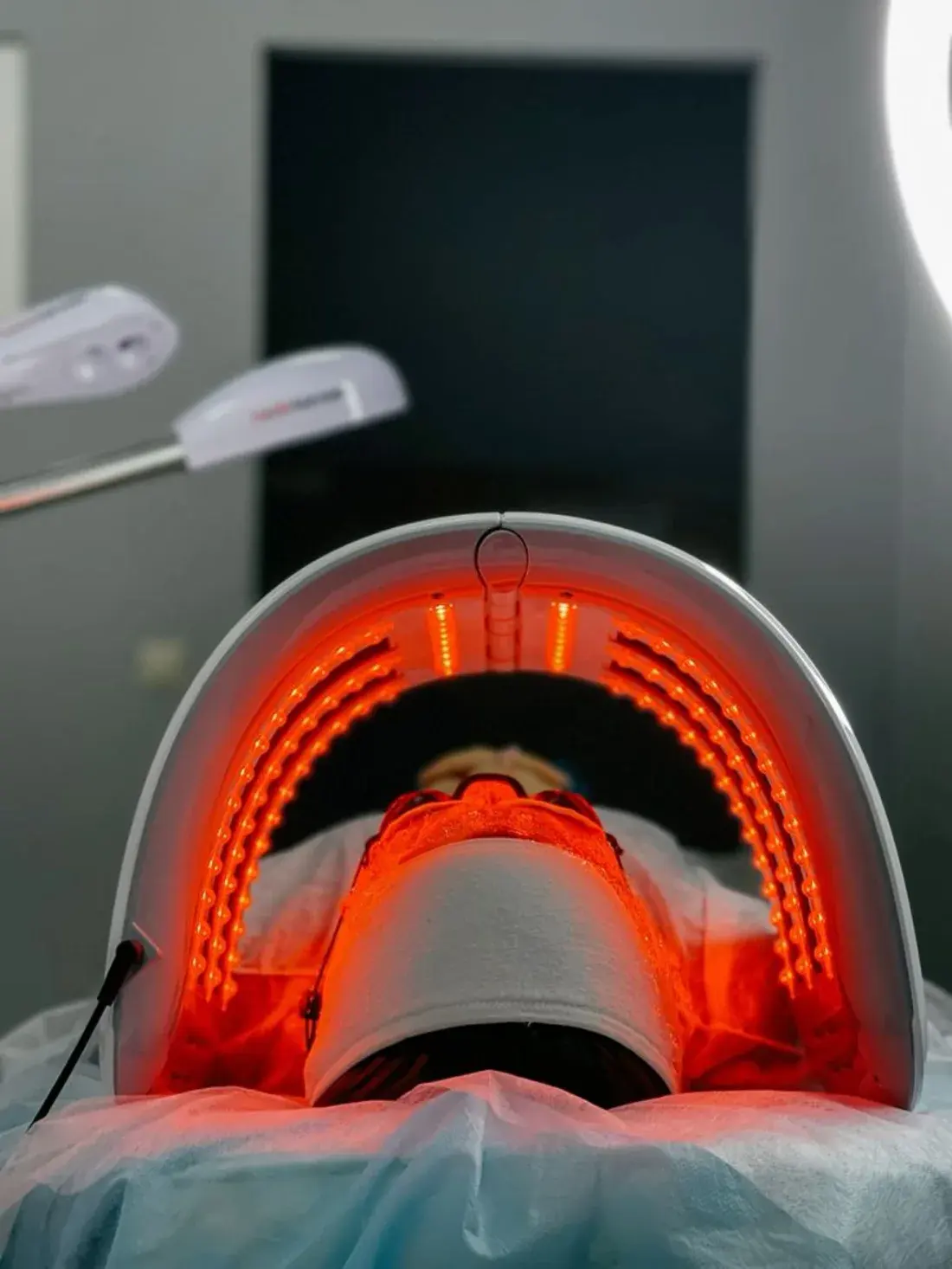
LED Light Therapy
A gentle, heat-free option to support calmer, more even skin.
How Long Does Melasma Treatment Take to Work?
Melasma is judged over months, not days, and the honest answer is that it varies with the depth of the pigment, your skin type and how well the triggers are controlled between visits. Most staged plans show early softening within about four to eight weeks, with the more meaningful change over three to six months. Results vary between individuals, and maintenance is part of the plan rather than a sign it did not work.
- Weeks 1–4
- Foundation phase: photoprotection and trigger control established, topicals introduced. Little visible change yet — this stage is what makes the rest hold.
- Weeks 4–8
- Early softening of the patches for many people, with in-clinic treatment introduced conservatively and reviewed each visit.
- Months 3–6
- The more meaningful improvement window. Progress is measured on how settled the pigment stays between visits, not on a single before-and-after.
- Ongoing
- A light maintenance rhythm designed to keep pigment quiet through the year, reviewed as seasons and triggers change.
What to Expect from Melasma Treatment
- 01
Consultation & diagnosis
A Specialist Dermatologist examines the pattern and history — sun, heat, hormones, medication, previous treatments — and confirms it is melasma rather than another pigmentary condition.
- 02
Foundation first
Photoprotection and trigger control are set up before any procedure — without this base, in-clinic work rarely holds.
- 03
Staged in-clinic treatment
Treatments are introduced conservatively and spaced over weeks, matched to your skin type and reviewed at each visit.
- 04
Review & maintain
Melasma is managed, not erased. Your plan settles into a light maintenance rhythm designed to keep pigment quiet through the year.
Meet Your Dermatologist
On melasma
With melasma, restraint is a treatment decision. I would rather clear pigment slowly and keep it away than clear it quickly and watch it rebound darker. We set the foundation, stage the work, and judge success over months — that honesty at the start is what makes the result last.
 Dr. Aishani ShahSpecialist Dermatologist · DHA-licensed
Why Choose Shookra for Melasma Treatment
 01
01Physician-led
Every protocol is planned and supervised by a DHA-licensed doctor.
 02
02Measured, then treated
We read your skin before we treat it, so the plan fits you — not a template.
 03
03Managed over time
Your care is tracked and adjusted as part of one practice, not one-off visits.
 04
04Medical-grade
Clinical protocols and equipment, in a discreet Dubai clinic.
Melasma Questions
01What causes melasma on the face?
02Can melasma be removed permanently?
03Which melasma treatment is most likely to work for me?
04Is laser safe for melasma?
05Why did previous treatment make my pigmentation worse?
06Do melasma creams from the pharmacy work?
07How long before I see a difference?
08Is melasma the same as hyperpigmentation?
09Does melasma go away after pregnancy?
010What does melasma treatment cost at Shookra?
Journal
Related reading
Skin & Dermatology7 min read
Why Pigmentation Is So Common in Dubai: Sun, Heat and Your Skin
Why facial pigmentation is so common in Dubai: sun, heat, hormones and skin trauma. What causes dark spots, how they are treated and when to see a dermatologist.
Read article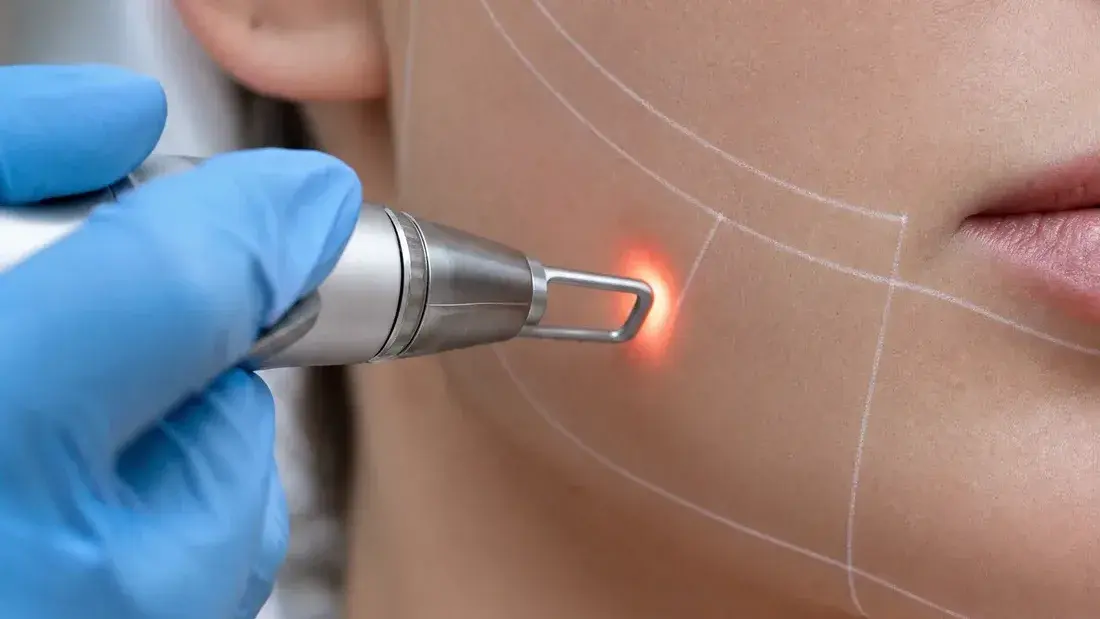
Skin & Dermatology8 min read
Pico Laser in Dubai: How It Works for Pigmentation, Scars and Skin Renewal
Pico laser in Dubai explained: how picosecond technology treats pigmentation, acne scars and tattoos, safety for darker skin tones, sessions, downtime and results.
Read article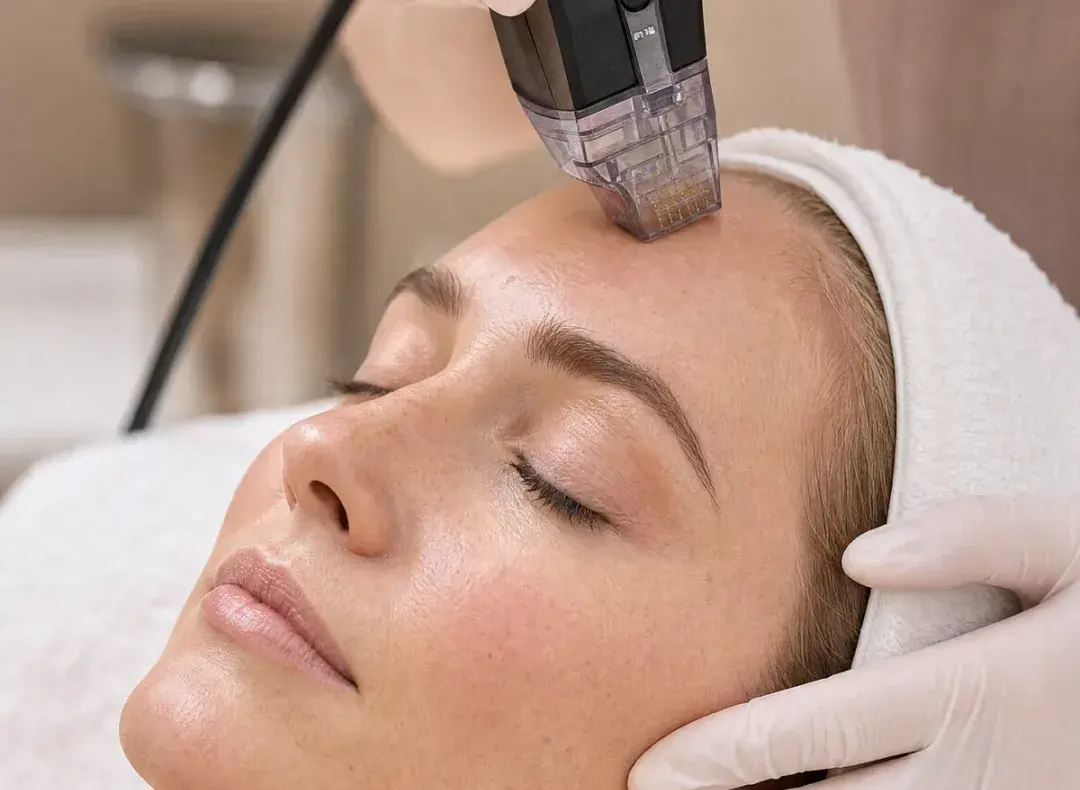
Skin & Dermatology8 min read
Morpheus8 in Dubai: RF Microneedling for Skin Tightening, Explained
Morpheus8 in Dubai explained: how RF microneedling tightens skin, what it treats, sessions, downtime, how long results last, cost factors and safety for darker skin.
Read article
Where we treat melasma
Melasma treatment in Dubai
Dubai · Business Bay
ShookraRetail 3, 15, Northside, Business Bay, Dubai, UAE+971 50 320 4553Open Mon–Sun · 10:00–22:00
View on Google MapsDubai · Palm Jumeirah
ShookraAndaz Dubai The Palm, 3rd Floor, Palm Jumeirah Rd, Palm Jumeirah, Dubai, UAE+971 50 320 4553Open Mon–Sun · 10:00–22:00
View on Google MapsLicensed & Regulated
DHA-licensed. MOHAP-approved.
Every treatment is delivered at Shookra, a DHA-licensed medical facility in Dubai. Every physician and clinician on our team is DHA-licensed and works to clinical protocol. Our health communications are independently reviewed and approved by the UAE Ministry of Health & Prevention (MOHAP).
Shookra Polyclinic · DHA Facility Permit #3449309 · MOHAP Advertisement Licence T0UOE5NK-020526

Book a consultation
Start with a diagnosis, not a guess.
Speak with our team on WhatsApp — we’ll arrange a dermatologist consultation and talk through your plan and pricing.