Skin condition · Dubai
Rosacea Treatment in Dubai
Persistent redness is not just sensitive skin — and it rarely settles on its own. At our Dubai clinic a dermatologist identifies your rosacea subtype and triggers first, then calms the skin with a staged plan built around what is actually driving the flares.
- First step
- Subtype diagnosed
- Plan
- Calm first, then treat
- Downtime
- Minimal
- Horizon
- Managed long-term
What Is Rosacea?
Rosacea is a chronic inflammatory skin condition that causes persistent redness, flushing, visible blood vessels and sometimes acne-like bumps, typically across the cheeks, nose and chin.
Rosacea is inflammation with a hair trigger: blood vessels in the central face dilate too readily, and the skin’s barrier and immune response overreact to everyday stimuli. It moves in flares — heat, sun, spicy food, alcohol, stress and harsh skincare are common provocations — and untreated, the baseline redness tends to deepen over years.
It also takes more than one form: some people mainly flush, some carry fixed redness and visible vessels, others develop papulopustular breakouts that are easily mistaken for acne — and each form is managed differently. Dubai’s heat and sun make trigger management a real part of the plan here.
What Causes Rosacea?
The precise cause of rosacea is not fully established, which is worth saying plainly rather than papering over. Current understanding points to a combination of factors: an over-reactive innate immune response, blood vessels that dilate too readily, a genetic predisposition, an impaired skin barrier, and in some people a reaction to microscopic mites that live normally on facial skin.
What is far better understood is what provokes it. Triggers are personal but cluster around a familiar list: sun and heat, hot drinks, alcohol, spicy food, exercise, sudden temperature change, stress, and skincare that is too active for the barrier. In this climate, sun and heat sit at the top of that list for most people — which makes photoprotection a treatment, not an afterthought.
Rosacea is not caused by poor hygiene, and it is not adult acne. Those two misconceptions are the reason a lot of skin arrives here having been scrubbed and stripped for years, which reliably makes it worse. Skin reactivity often tracks broader health, sleep and stress, a connection we look at in skin as the biomarker you can see.
Rosacea Symptoms and Subtypes
Rosacea most often begins between the ages of 30 and 50 and is more visible in fair skin, though it affects — and is frequently missed in — deeper skin tones, where redness reads as a dusky or violaceous tone rather than obvious pink. It is commonly mistaken for acne or allergy, which is why many people arrive having treated the wrong thing for years.
Dermatology usually describes rosacea in four recognised patterns: one dominated by flushing and visible vessels; one with acne-like papules and pustules; one involving thickening of the skin, particularly around the nose; and one affecting the eyes, causing grittiness, dryness or irritation. People often have features of more than one, and the pattern decides the plan.
Eye symptoms deserve particular attention — persistent grittiness or irritation alongside facial redness should be mentioned at your consultation, as ocular involvement needs its own management and, at times, an ophthalmology opinion.
- Flushing that comes on quickly
- Persistent central-face redness
- Visible small vessels
- Acne-like bumps without blackheads
Rosacea vs Acne: How to Tell Them Apart
This is the most consequential distinction on the page. Rosacea and acne can look similar, but the treatments diverge sharply — and standard acne routines frequently make rosacea worse by stripping an already-compromised barrier.
| Rosacea | Acne | |
|---|---|---|
| Background skin | Bumps sit on a background of persistent redness and flushing. | Skin between spots is usually normal in tone. |
| Blackheads & whiteheads | Absent — this is the single most useful distinguishing sign. | Typically present, often the earliest feature. |
| Where it appears | Central face: cheeks, nose, chin, forehead. | Face, and commonly also back, chest and shoulders. |
| Typical onset | Usually 30–50. | Most common in teens and twenties, though adult acne is frequent. |
| Response to acne products | Often worsens — active or stripping products provoke the barrier. | Generally improves with appropriate treatment. |
How Is Rosacea Treated in Dubai?
The first job is an accurate diagnosis — separating rosacea from acne, dermatitis and reactive skin, and identifying which form you have. The plan is then layered: barrier repair and trigger control as the foundation, medical management where the subtype calls for it, and light-based treatment for fixed redness and visible vessels.
Sequencing matters: flushing and vessel-led patterns respond most reliably to trigger control and light-based treatment, while papulopustular patterns usually need medical therapy to settle the bumps before any device work is worthwhile. Treating them the same way is why a lot of rosacea care stalls.
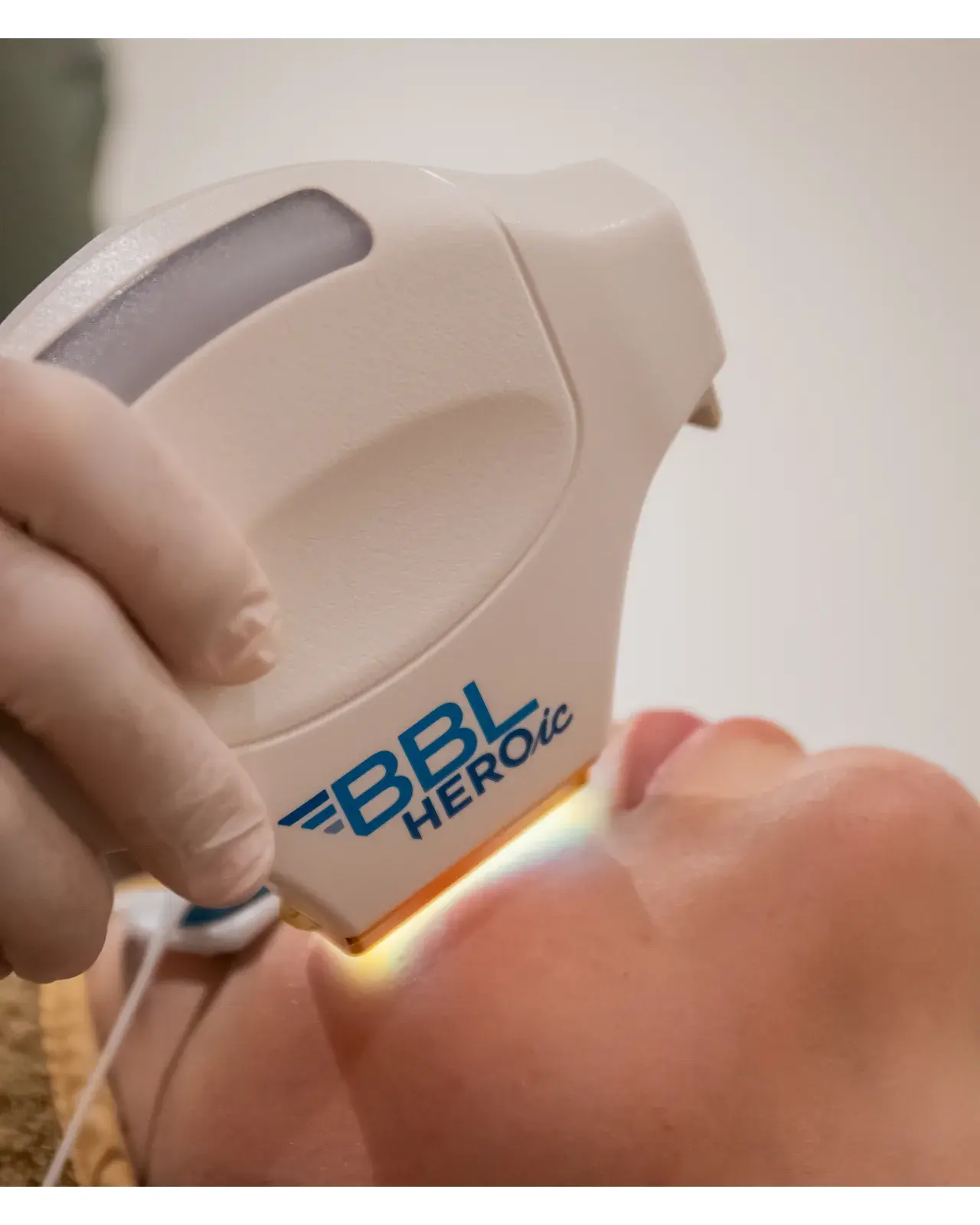
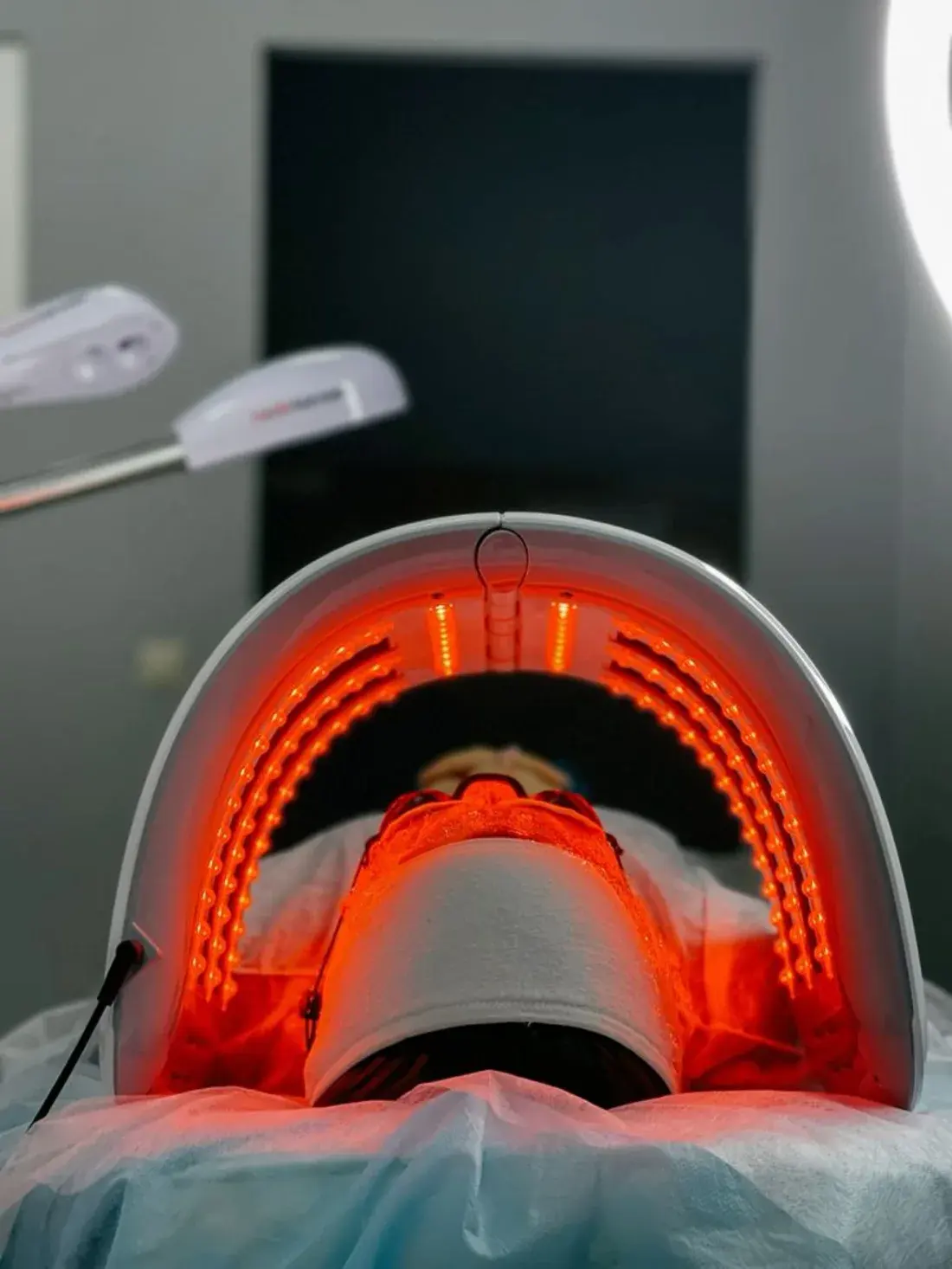
Throughout, the skin is treated gently. Rosacea skin punishes harshness, so everything from the skincare we recommend to the in-clinic work is chosen to calm, not challenge. Fixed redness and visible vessels will not resolve with skincare alone — that is where light-based treatment earns its place, once the baseline is calm.
How Long Does Rosacea Treatment Take to Work?
Rosacea is managed rather than cured, so progress is measured in how infrequent and short the flares become. Barrier repair and trigger control often make a noticeable difference within two to six weeks; papulopustular bumps typically settle over six to twelve weeks with appropriate medical management; fixed redness and visible vessels usually need a short series of light-based sessions spaced about four weeks apart. Results vary between individuals, and maintenance keeps them.
- Weeks 1–2
- Routine stripped back to barrier repair, and your personal triggers mapped. Reactivity often settles first, before visible redness does.
- Weeks 2–6
- A calmer baseline for most people. This is the foundation — in-clinic treatment on unsettled skin tends to disappoint.
- Weeks 6–12
- Papulopustular bumps typically settle in this window where medical therapy is part of the plan.
- Light-based series
- Fixed redness and vessels are treated over a short series roughly four weeks apart, then reviewed. Maintenance sessions keep the result.
What to Expect from Rosacea Treatment
- 01
Consultation & subtype
Your dermatologist confirms it is rosacea, identifies the form it takes on your skin, and maps your personal triggers.
- 02
Calm the baseline
Barrier-repairing skincare and trigger management settle the day-to-day reactivity before in-clinic treatment begins.
- 03
Targeted treatment
Where redness or vessels persist, light-based sessions are introduced gradually and spaced over weeks, tuned to your skin.
- 04
Keep it quiet
Rosacea is managed rather than cured — the plan tapers to a light maintenance rhythm that keeps flares infrequent and short.
Meet Your Dermatologist
On rosacea
Half of treating rosacea well is simply naming it correctly — I regularly see skin that has spent years on acne routines that made the redness worse. Once the diagnosis is right and the barrier is respected, most people are surprised how much calmer their skin can sit.
 Dr. Aishani ShahSpecialist Dermatologist · DHA-licensed
Why Choose Shookra for Rosacea Treatment
 01
01Physician-led
Every protocol is planned and supervised by a DHA-licensed doctor.
 02
02Measured, then treated
We read your skin before we treat it, so the plan fits you — not a template.
 03
03Managed over time
Your care is tracked and adjusted as part of one practice, not one-off visits.
 04
04Medical-grade
Clinical protocols and equipment, in a discreet Dubai clinic.
Rosacea Treatment Questions
01What are the subtypes of rosacea?
02Can rosacea be cured?
03How do I know it's rosacea and not acne?
04Which rosacea treatment is most effective?
05Does light-based treatment for redness hurt?
06What triggers should I avoid?
07Can rosacea affect the eyes?
08Does rosacea get worse over time?
09Is rosacea more difficult to spot in darker skin?
010What does rosacea treatment cost at Shookra?
Journal
Related reading
Skin & Dermatology5 min read
Hydrafacial for men: a modern fountain of youth
Discover how Hydrafacial differs from other facial treatments, and whether you can combine it with other aesthetic procedures.
Read article
Skin & Dermatology5 min read
Can you do dermaplaning while pregnant?
What makes dermaplaning suitable for future moms? How does the treatment help your skin, and how does it compare to similar procedures?
Read article
Skin & Dermatology7 min read
Adult Acne: Why Breakouts Can Get Worse in Dubai and What Helps
Why adults get acne, why Dubai's heat, humidity and sun can make breakouts worse, and when it is time to see a dermatologist. A doctor-led, evidence-based guide.
Read article
Where we treat rosacea
Rosacea treatment in Dubai
Dubai · Business Bay
ShookraRetail 3, 15, Northside, Business Bay, Dubai, UAE+971 50 320 4553Open Mon–Sun · 10:00–22:00
View on Google MapsDubai · Palm Jumeirah
ShookraAndaz Dubai The Palm, 3rd Floor, Palm Jumeirah Rd, Palm Jumeirah, Dubai, UAE+971 50 320 4553Open Mon–Sun · 10:00–22:00
View on Google MapsLicensed & Regulated
DHA-licensed. MOHAP-approved.
Every treatment is delivered at Shookra, a DHA-licensed medical facility in Dubai. Every physician and clinician on our team is DHA-licensed and works to clinical protocol. Our health communications are independently reviewed and approved by the UAE Ministry of Health & Prevention (MOHAP).
Shookra Polyclinic · DHA Facility Permit #3449309 · MOHAP Advertisement Licence T0UOE5NK-020526

Book a consultation
Start with a diagnosis, not a guess.
Speak with our team on WhatsApp — we’ll arrange a dermatologist consultation and talk through your plan and pricing.