
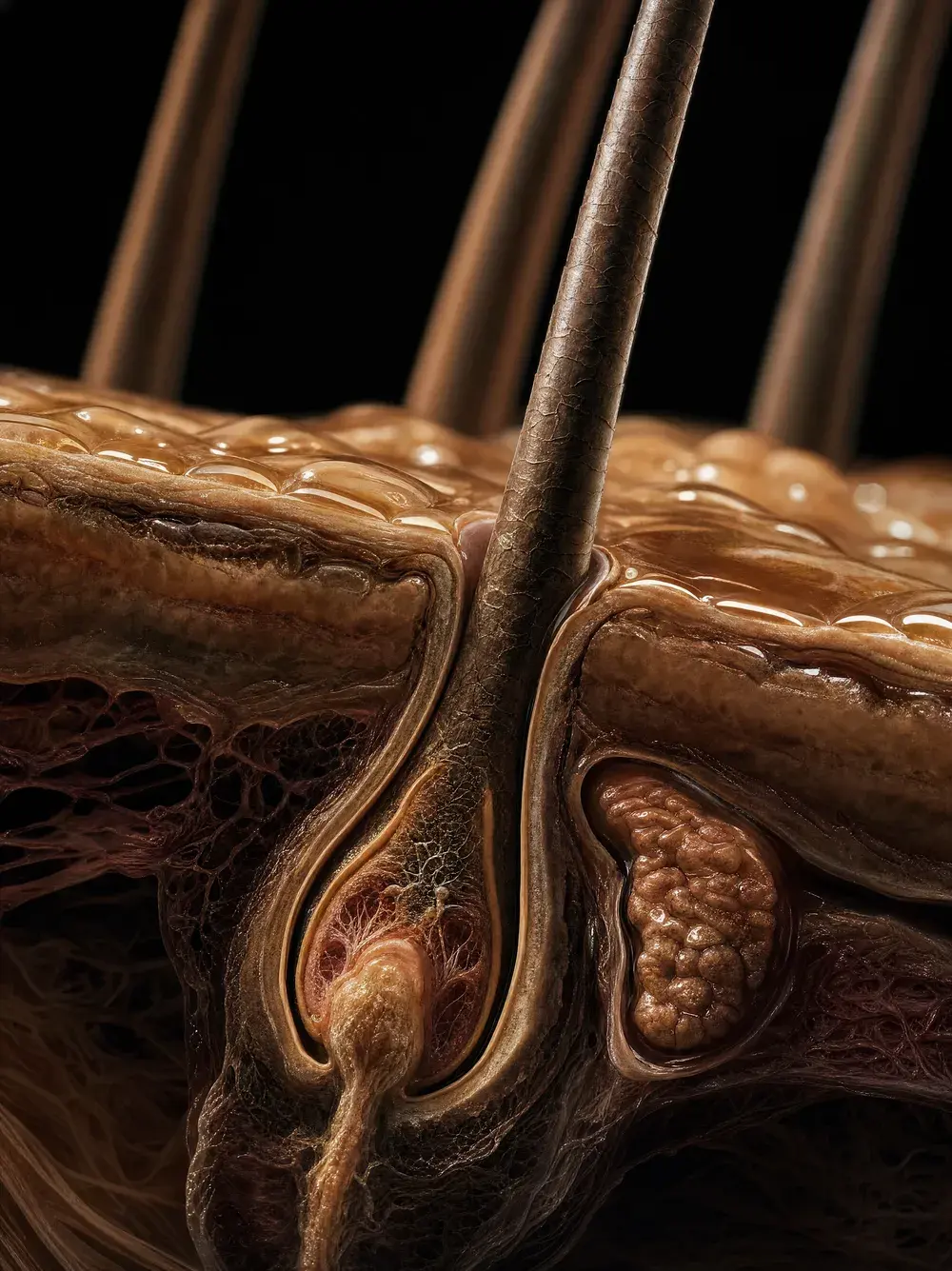
Hair Restoration
Hair Loss Treatment & Restoration in Dubai
Hair loss is a symptom, not a diagnosis. We identify your cause first — genetic, hormonal, nutritional or stress-related — then match a regenerative protocol to it. Honest about what the evidence supports, and what it doesn’t.
Diagnose the cause. Then treat it.
- 9
- causes assessed
- 1:1
- physician-led
- DHA
- licensed
- 0
- false promises
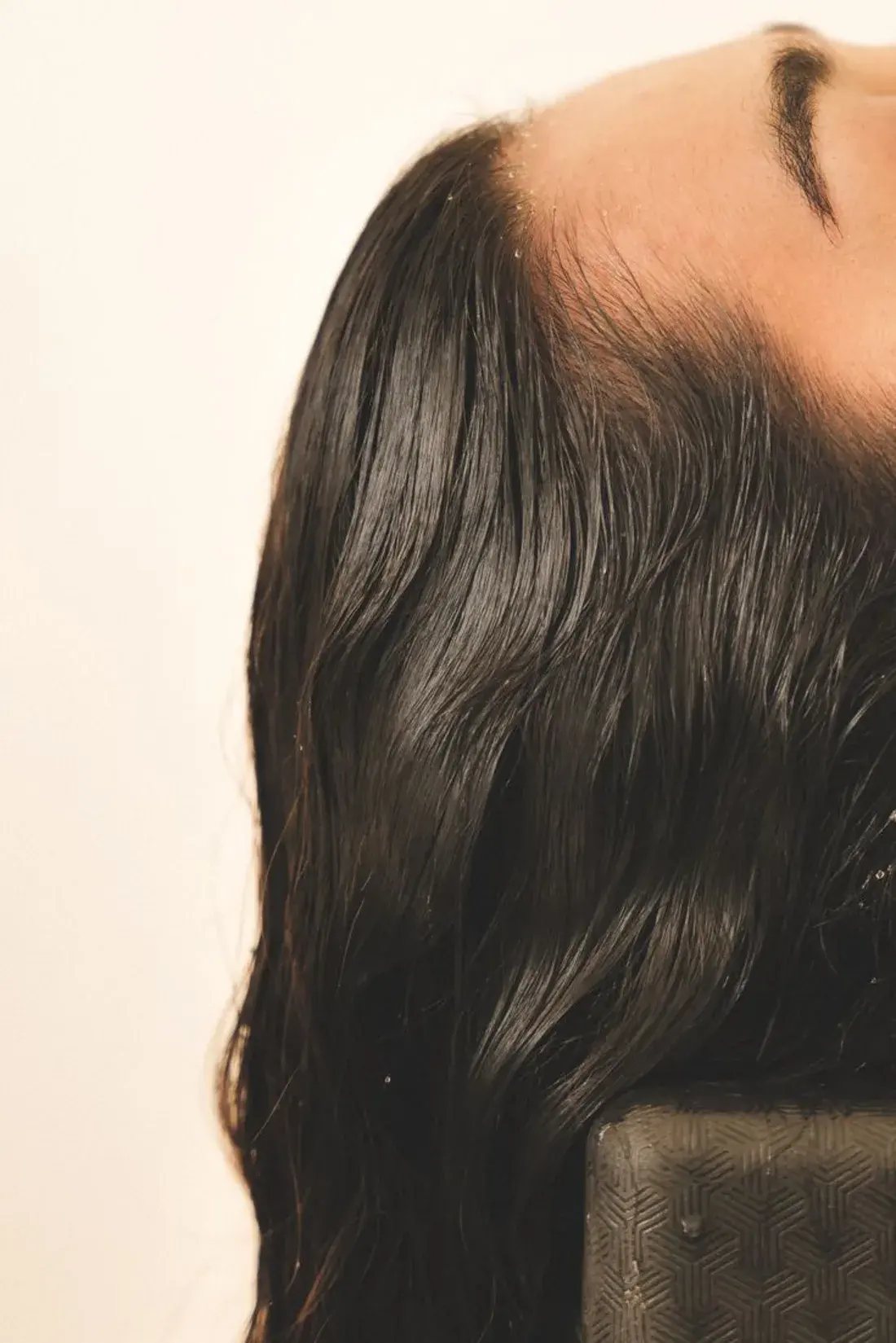
The approach
Hair Loss Treatment in Dubai: Diagnose the Cause, Then Treat It
A regrowth protocol applied to the wrong cause is effort wasted. So we start with the diagnosis, every time.
- 01
Diagnose
We identify the actual cause — history, the scalp and, where useful, bloodwork — before recommending any treatment.
- 02
Treat
Regenerative scalp protocols matched to that cause: PRP, exosome and growth-factor signalling, micro-channelling and targeted mesotherapy.
- 03
Maintain
Hair responds over a course, not a single session. We track your response and adjust, and address the underlying driver.
Types & causes
Why is your hair falling out?
Hair loss has many causes, and each is treated differently. Hover any one to see what it is and how we approach it.
Hover a cause to see what it is and how we approach it
- Male patternAndrogenetic hair loss — a genetic, hormone-driven thinning at the crown and hairline. We confirm it, then build a regenerative protocol and address modifiable factors.
- Female patternDiffuse thinning across the top of the scalp, often hormone-related. Diagnosis rules out other causes first, then a tailored scalp protocol follows.
- Telogen effluviumA temporary, diffuse shedding triggered by stress, illness, surgery or rapid weight change — usually months after the event. Often recovers once the trigger is addressed.
- Postpartum sheddingA common, usually self-limiting shed after pregnancy as hormones normalise. We reassure, monitor and support where helpful.
- Iron & nutritionLow ferritin, vitamin D or protein can drive shedding. Bloodwork finds it, and correcting the deficiency is often the most effective step.
- Thyroid & hormonalThyroid and hormonal shifts show up in the hair. Where bloods point here, we treat the driver — scalp protocols work better once it's addressed.
- TractionTension from tight styles over time. Caught early it's often reversible; we advise on styling alongside any scalp treatment.
- Seasonal sheddingA normal increase in shedding at certain times of year. We distinguish it from true hair loss so you're not treating something that will settle on its own.
- Scalp & inflammationAn inflamed or unhealthy scalp undermines regrowth. We calm and treat the scalp environment as part of the protocol.
Understand it
Hair Loss Treatments — What the Evidence Supports
Evidence-led and honest — no guaranteed-regrowth language.
Hair reflects what’s happening underneath
The scalp is downstream of the rest of your physiology. Thyroid and hormonal shifts, iron and vitamin status, inflammation and stress all show up in the hair — which is why treating it well often means looking past the scalp.
PRP and regenerative protocols
Regenerative options like PRP, exosome signalling and microneedling aim to support the follicle environment. They have a reasonable evidence base for certain types of hair loss, and are usually delivered as a course with maintenance. Response varies between people, and no protocol guarantees regrowth.
Why diagnosis comes first
The most effective step is often the simplest: finding and correcting the driver. A nutritional gap or thyroid issue treated directly can do more than any scalp protocol — and the protocols themselves work better once the underlying cause is addressed.
Surgical hair restoration
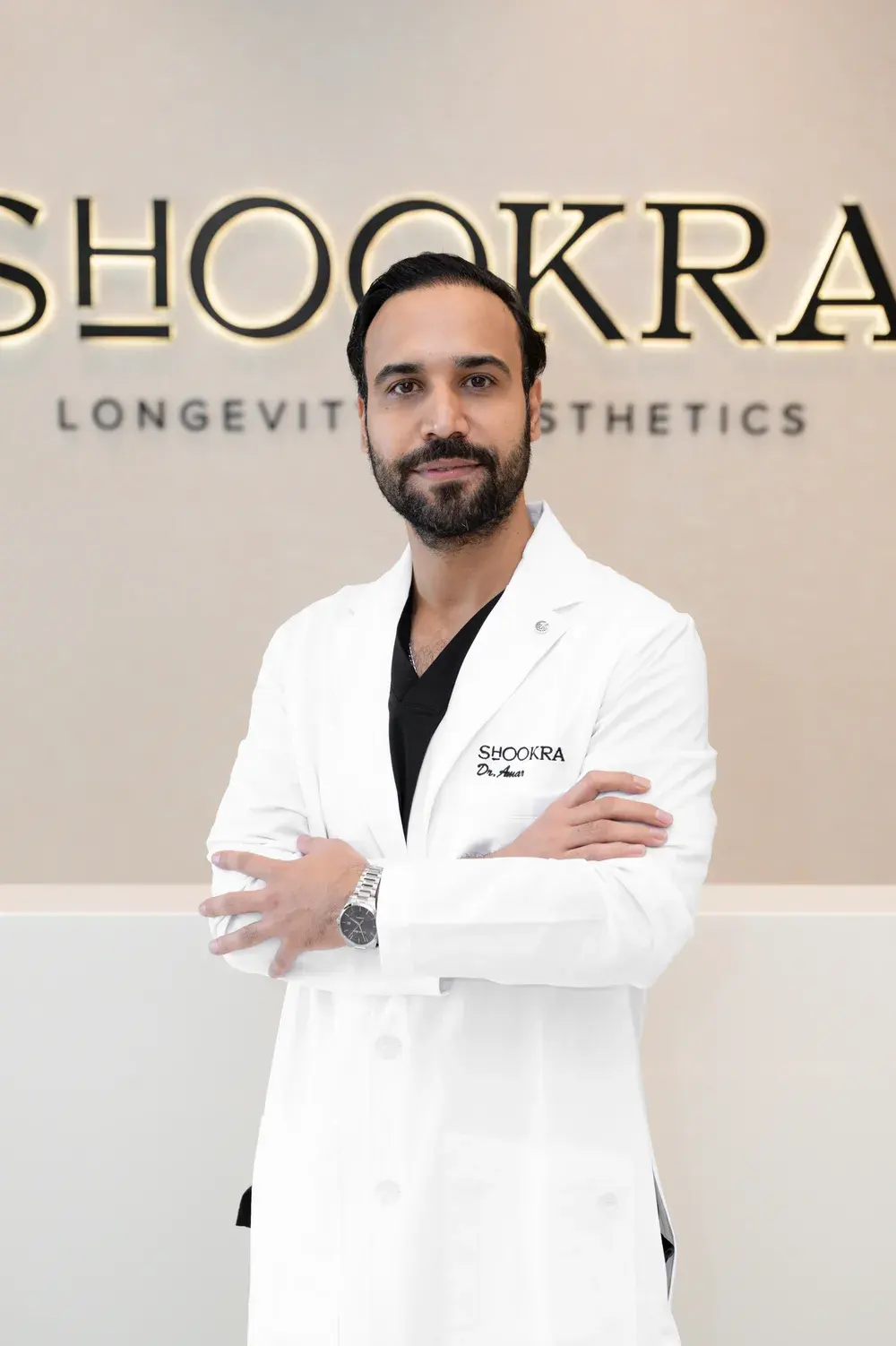
Dr. Amar Helali
Hair Transplant Physician · DHA-licensed
Dr. Amar Helali is a DHA-licensed physician whose practice centres on hair transplantation and aesthetic medicine. He holds an MD from Ahvaz Jundishapour University of Medical Sciences and certification in hair transplantation and facial aesthetics, and has practised in Dubai since 2022 — the last two years focused on hair restoration. He is published in peer-reviewed clinical research, and consults in Arabic, Persian and English.
- Qualification
- MD — Ahvaz Jundishapour University of Medical Sciences
- Licence
- DHA-licensed, practising in Dubai since 2022
- Certification
- Hair transplantation · Master of Facial Aesthetics
- Languages
- Arabic · Persian · English
The menu
Hair Treatments in Dubai
Diagnosis first, then regenerative scalp protocols — matched to your cause of hair loss.
Regenerative Regrowth
Work with your own repair biology.
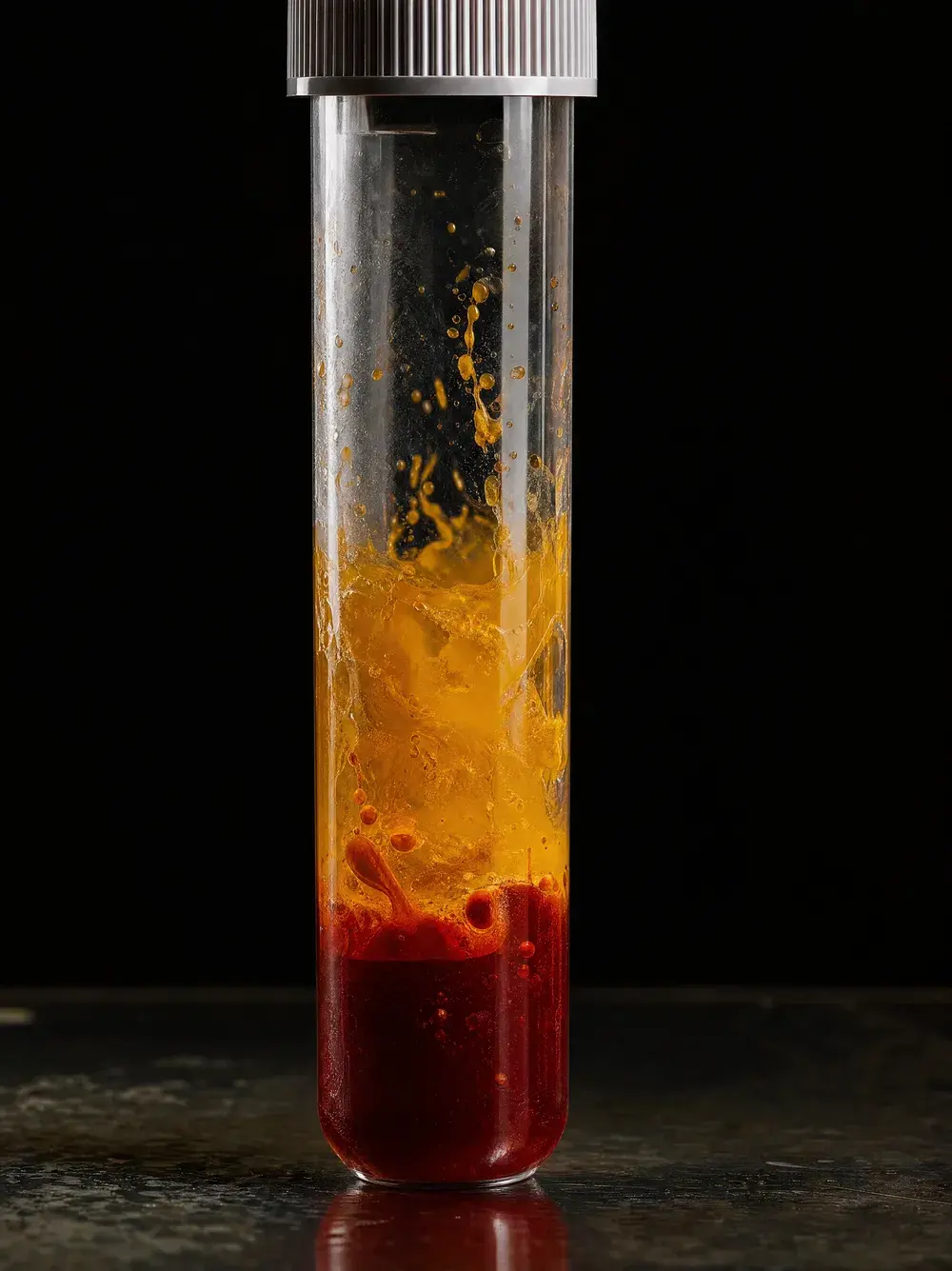 PRP for HairA concentrate from your own blood, applied to the scalp over a course.Autologous · platelet-rich plasma
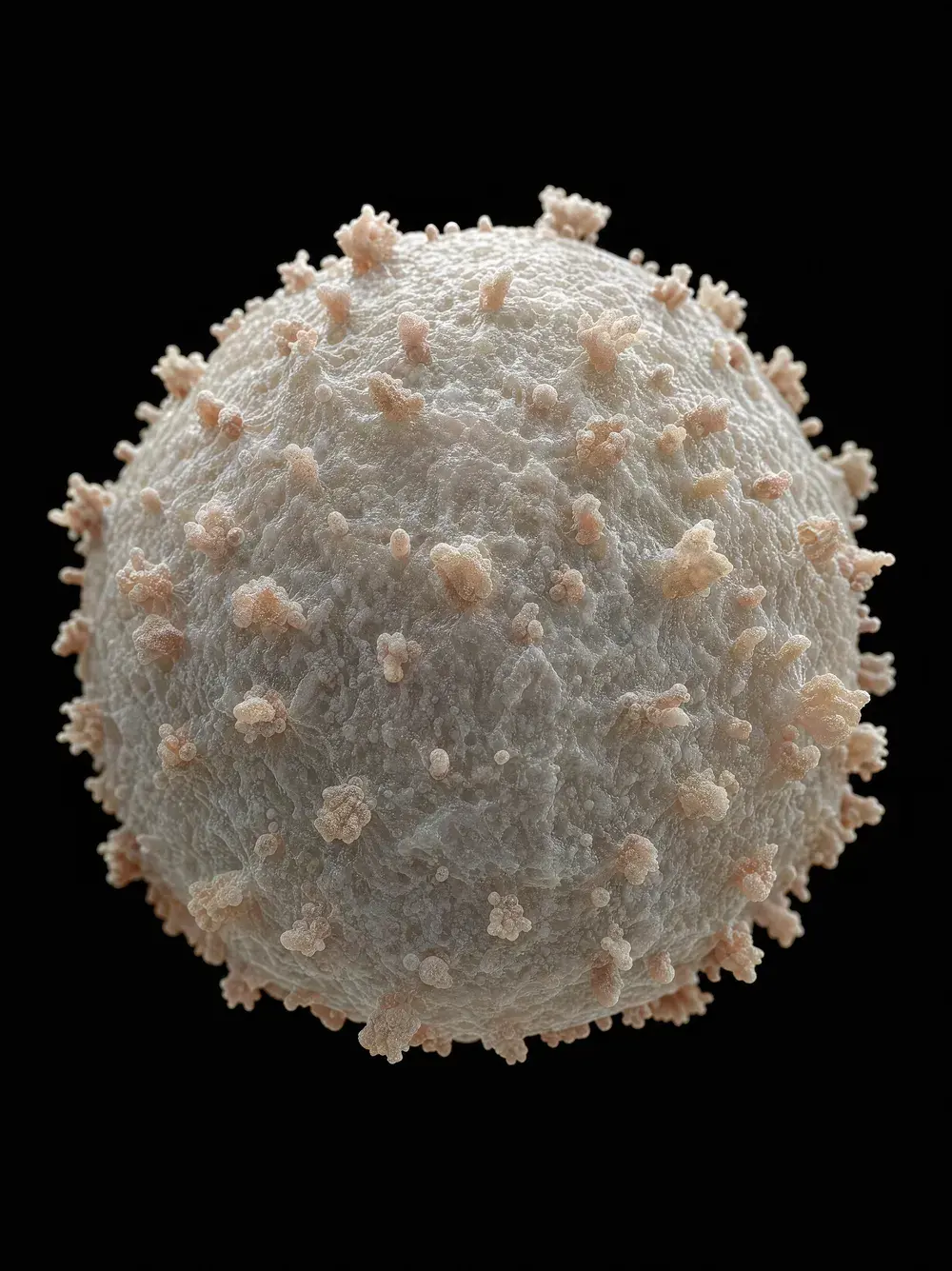 Exosomes for HairConcentrated signalling particles that support scalp and follicle recovery.Regenerative signalling
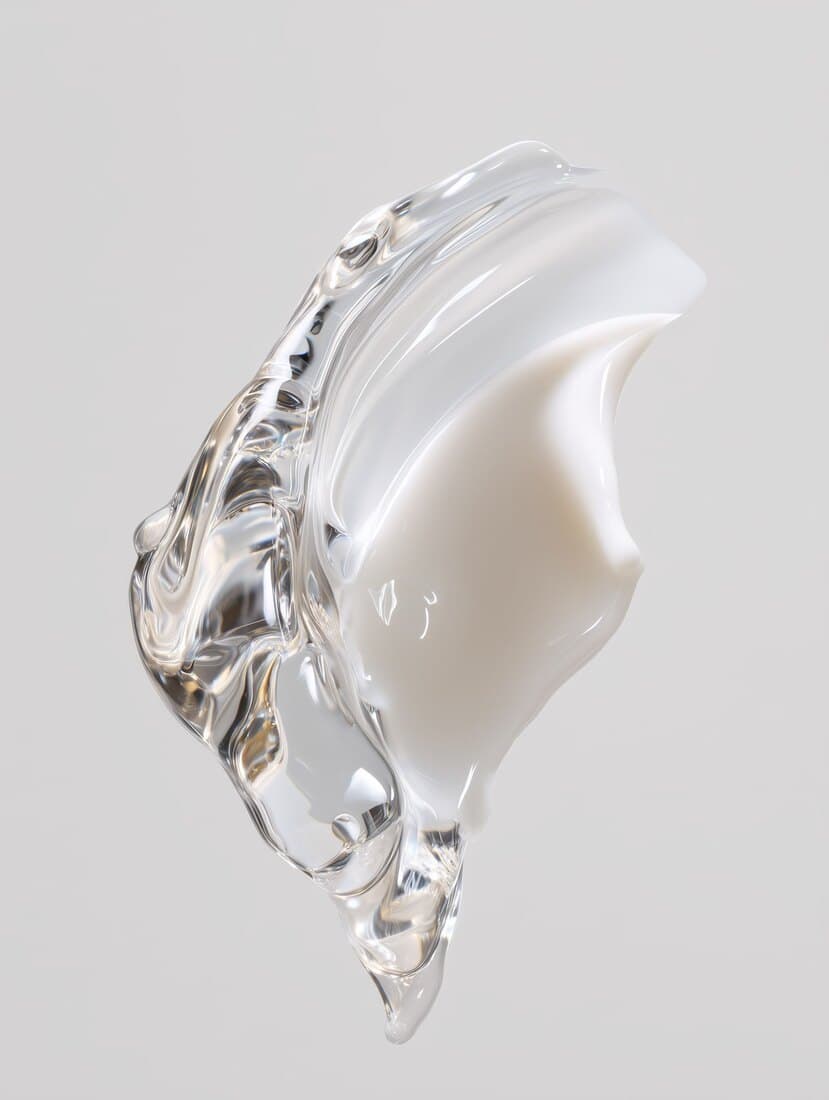 Microneedling for HairControlled micro-channels to stimulate the scalp and aid delivery.Scalp micro-channelling
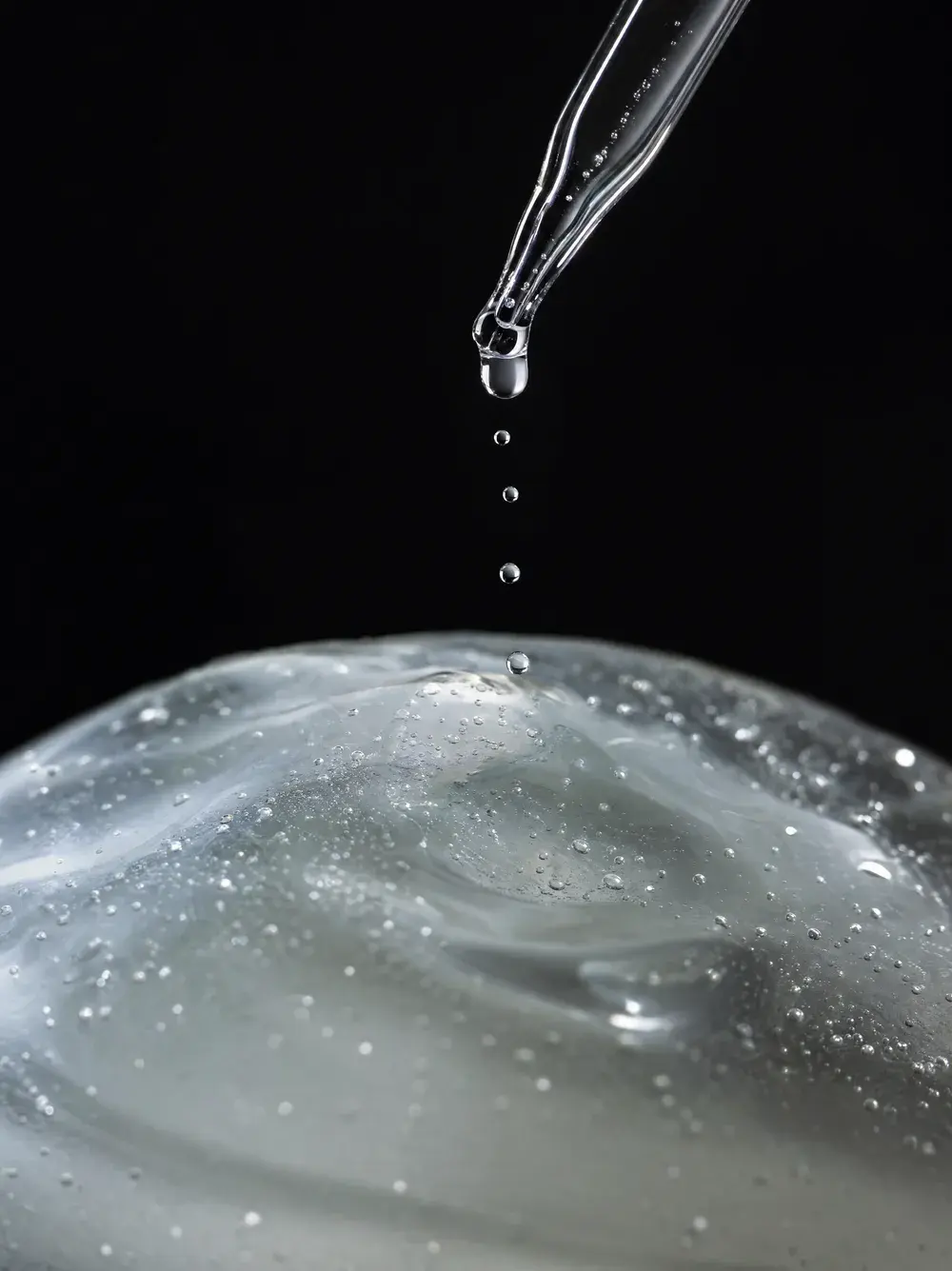 Scalp MesotherapyMicro-injections of vitamins and actives into the scalp.Micro-injected nutrients
Surgical Restoration
Where the hair is gone, not just thinning.
The clinicians
Physician-led, every protocol.
Dr. Amar Helali
Hair Transplant Physician · DHA-licensed
Dr. Amar Helali is a DHA-licensed physician whose practice centres on hair transplantation and aesthetic medicine. He holds an MD from Ahvaz Jundishapour University of Medical Sciences and certification in hair transplantation and facial aesthetics, and has practised in Dubai since 2022 — the last two years focused on hair restoration. He is published in peer-reviewed clinical research, and consults in Arabic, Persian and English.
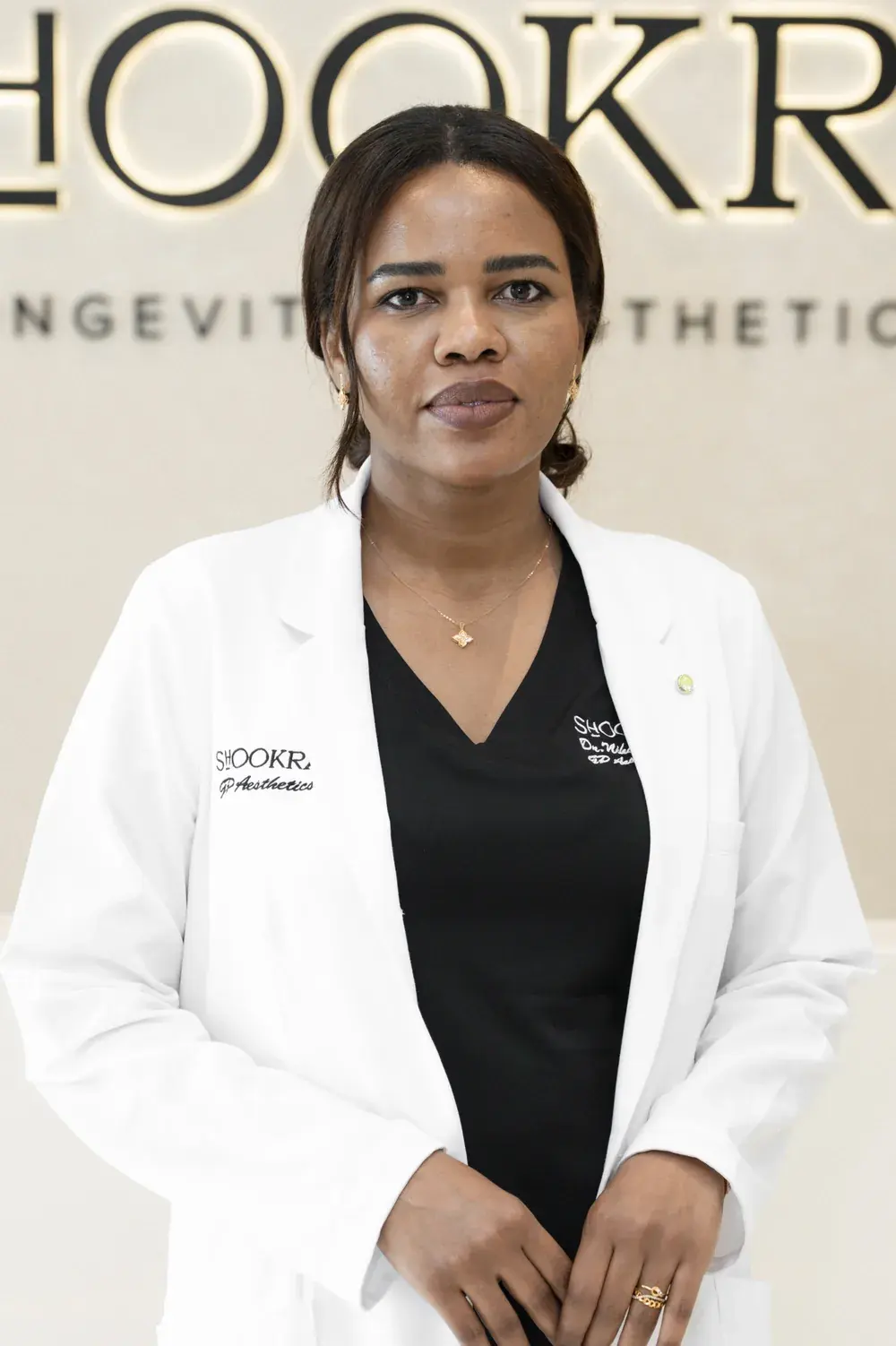
Dr. Nihal Hussein
Aesthetic & Functional Medicine
Dr. Nihal Hussein is an internationally certified Aesthetic and Functional Medicine Specialist, accredited by the American Academy of Anti-Aging Medicine. With clinical training across Ireland, Egypt, and the USA, she integrates advanced dermatology, hormonal diagnostics, and regenerative medicine into a holistic, results-driven practice.
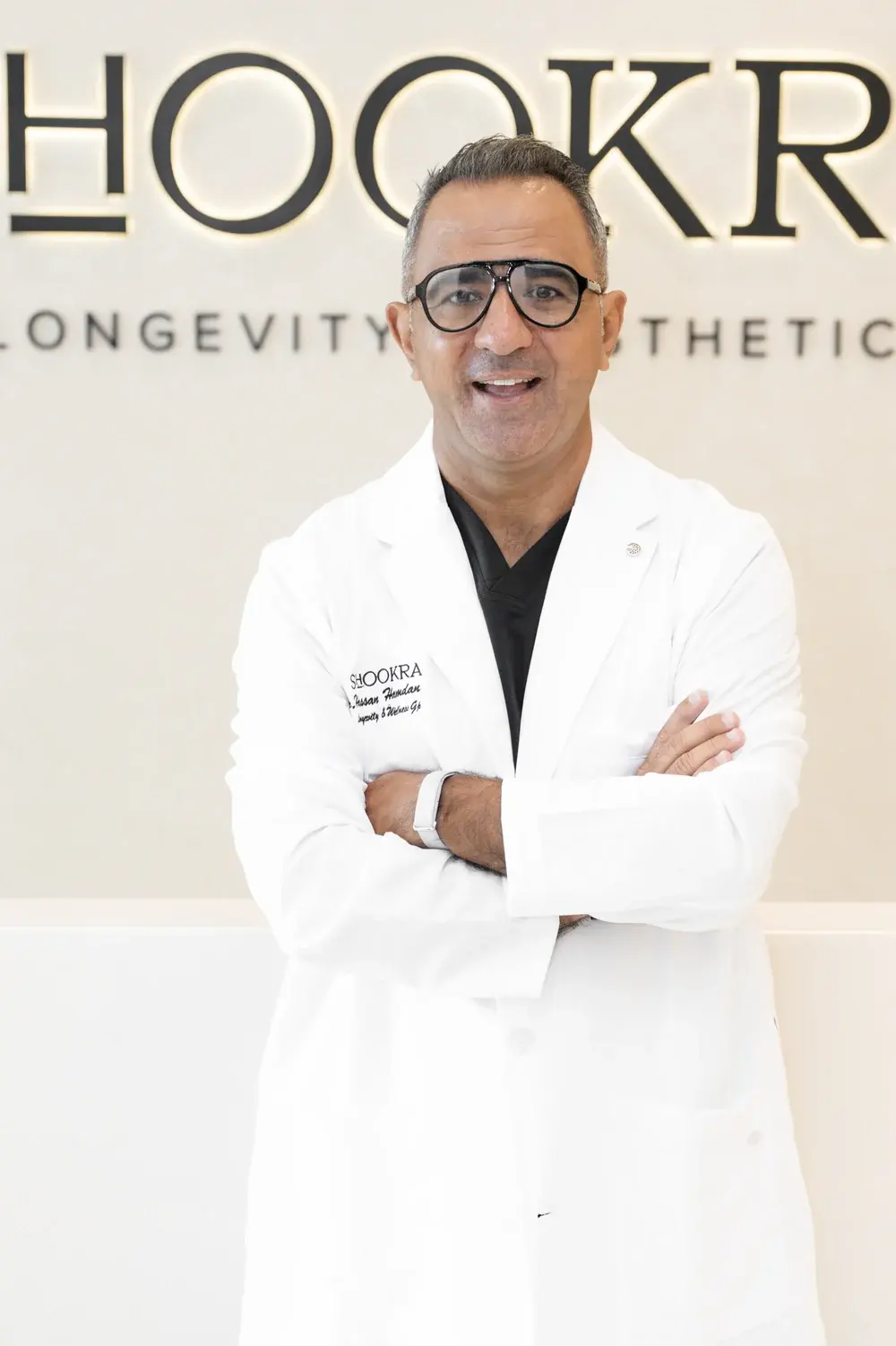
Dr. Hassan Hamdan
General Practitioner
Dr. Hassan Hamdan is a multilingual General Practitioner specialising in regenerative medicine and advanced cellular-based therapies. Trained in the United States and now based in Dubai, he brings a precision-focused, evidence-driven approach to patient care.
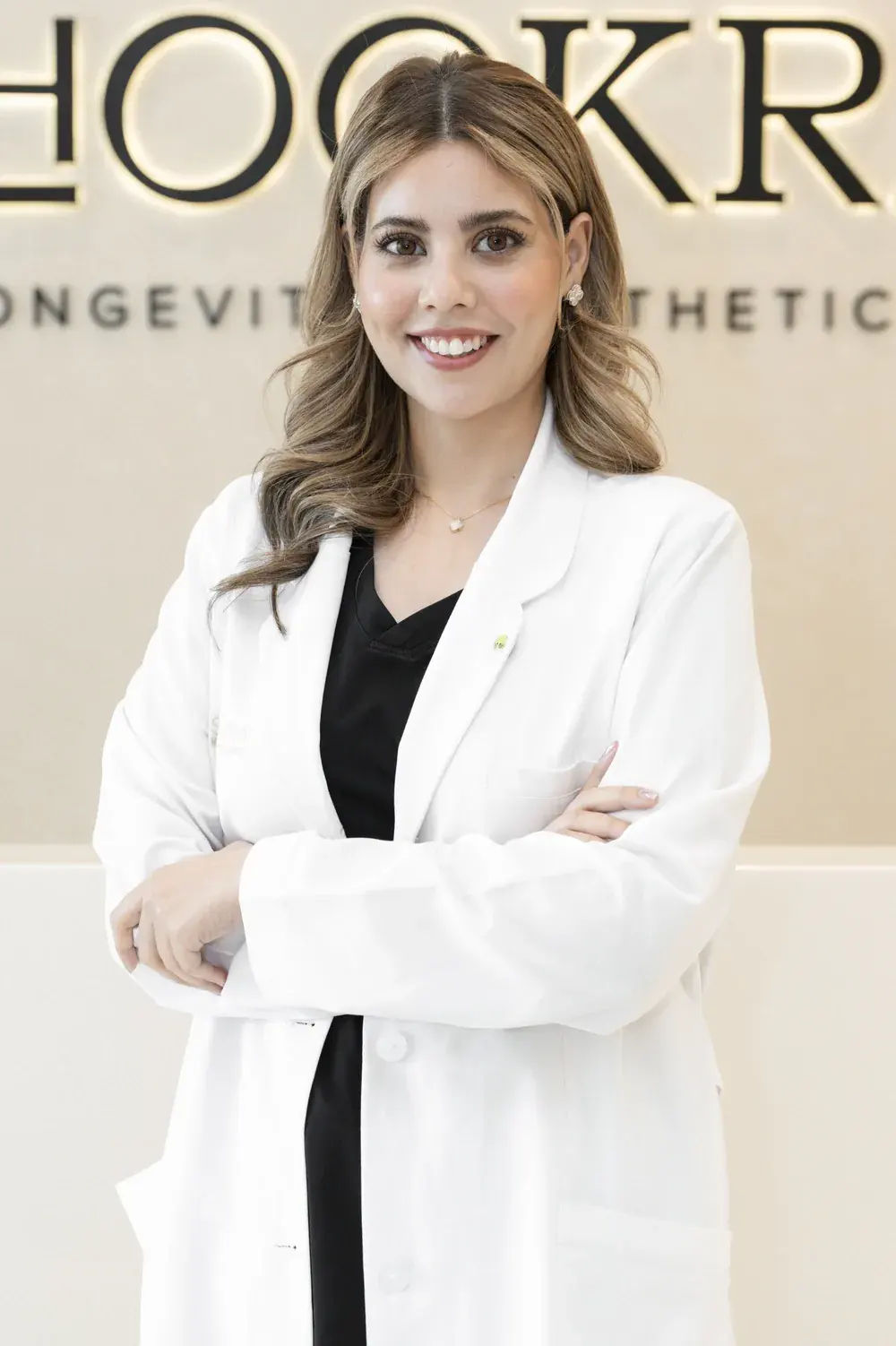
Dr. Bushra Mir
Medical Director · GP
Dr. Bushra Mir is a Dubai-based General Practitioner holding international board certification in Aesthetic and Anti-Aging Medicine, with a clinical focus on advanced aesthetic interventions and preventive care.
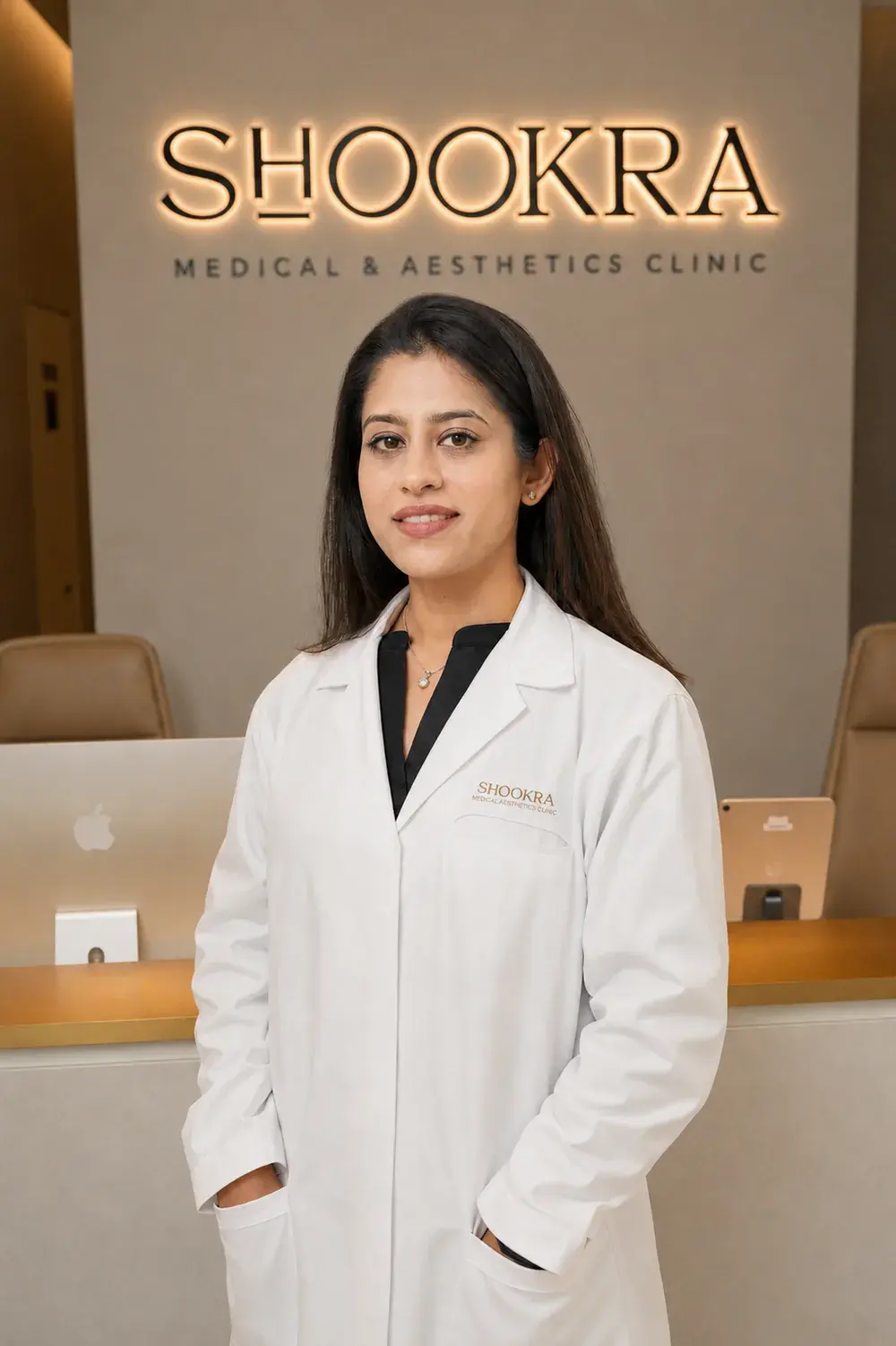
Dr. Aishani Shah
Specialist Dermatologist
Dr. Aishani Shah is a Specialist Dermatologist with an MD in Dermatology and the European Board Diploma in Dermatology and Venereology (EBDVD), and over 12 years of clinical experience — eight of them in Dubai. She treats skin, hair and nail conditions across adults and children — from acne, eczema and psoriasis to pigmentary disorders — alongside minimally invasive aesthetic dermatology such as skin boosters, PRP and chemical peels.
Questions
Hair Loss Questions
Why is my hair falling out?
Does hair loss treatment actually work?
Why do you diagnose before treating?
What is PRP for hair?
How many sessions will I need?
Is there downtime?
Do you perform hair transplants?
Can hair loss be a sign of something else?
Start with the diagnosis.
Speak with our team on WhatsApp — we’ll talk through your hair, find the cause and explain a realistic plan, pricing included.