Skin · Laser · Dubai
Laser Skin Rejuvenation in Dubai
A medically supervised treatment that directs measured laser or light energy at the skin to even tone, soften texture and refine the skin's overall appearance. Each session is carried out under DHA-licensed medical supervision at our Dubai clinic, with the device and settings matched to your skin at consultation.
Medically reviewed byDr. Nihal HusseinAesthetic & Functional Medicine · DHA-licensedLast reviewed
- Duration
- Varies by area
- Downtime
- Depends on the setting used
- Course
- Often a short course, spaced
- Setting
- In-clinic, doctor-led
What Is Laser Skin Rejuvenation?
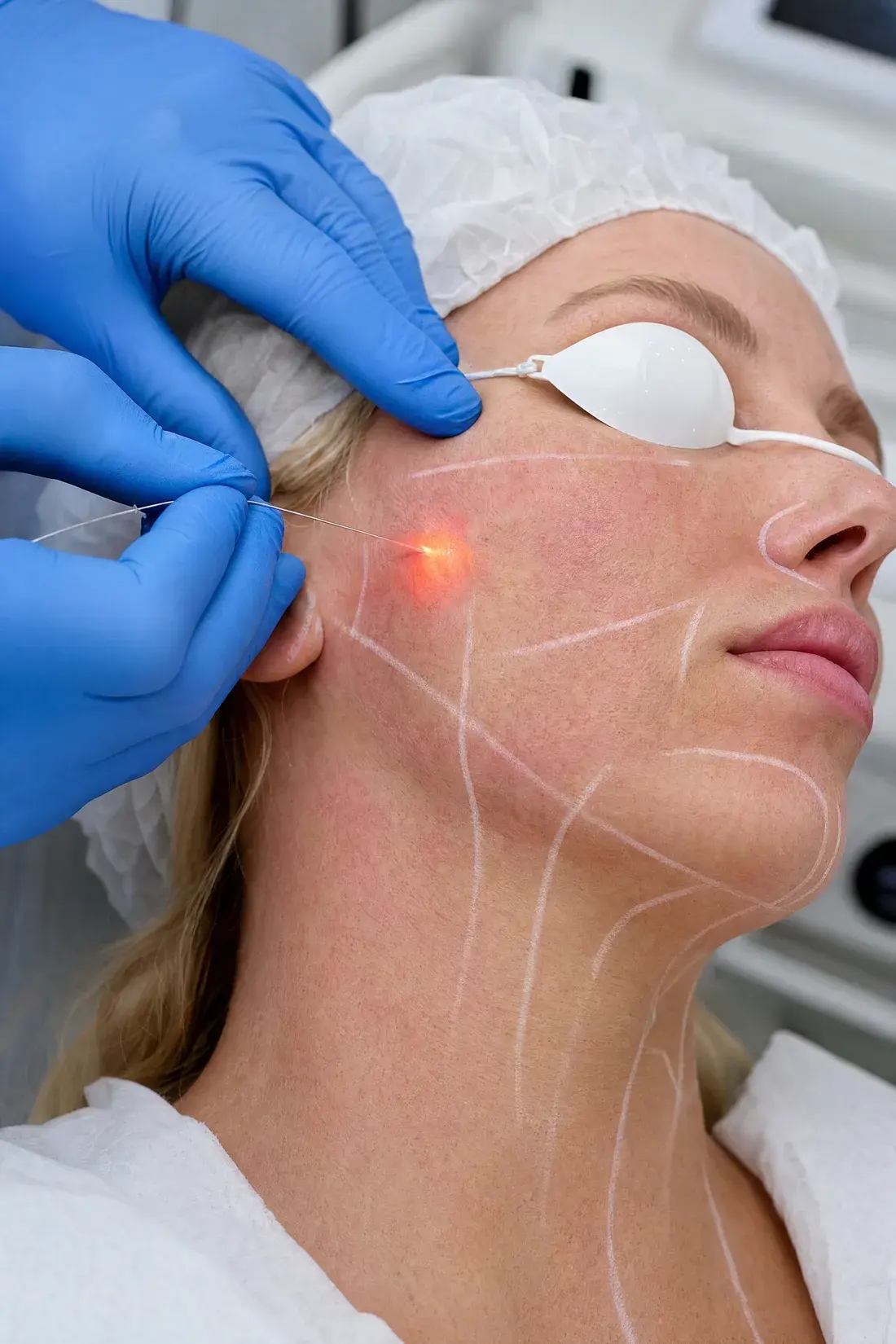
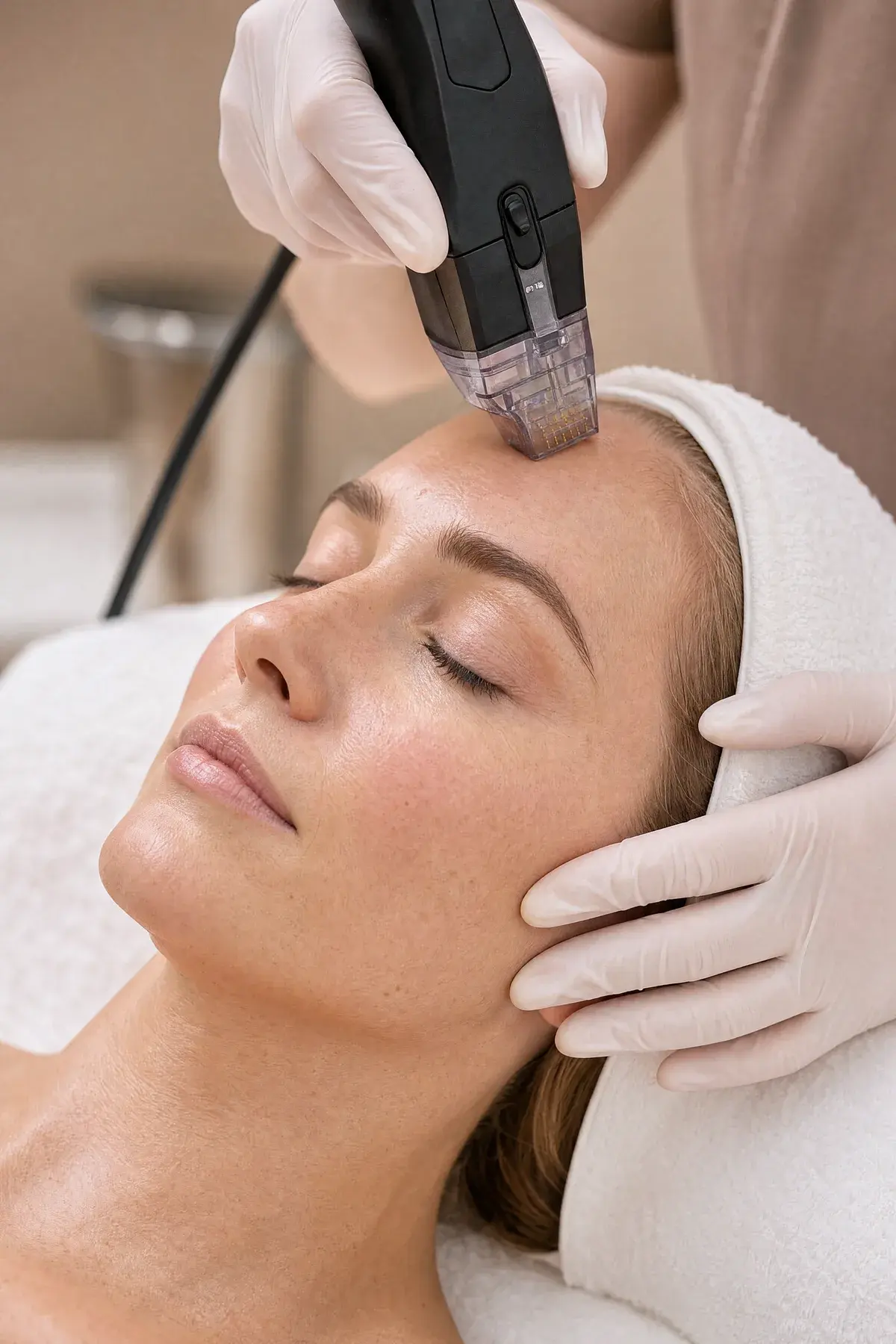
Laser skin rejuvenation is a treatment that uses targeted light or laser energy directed at the skin to even tone, soften texture and refine the skin's appearance, with the device and settings chosen for each patient.
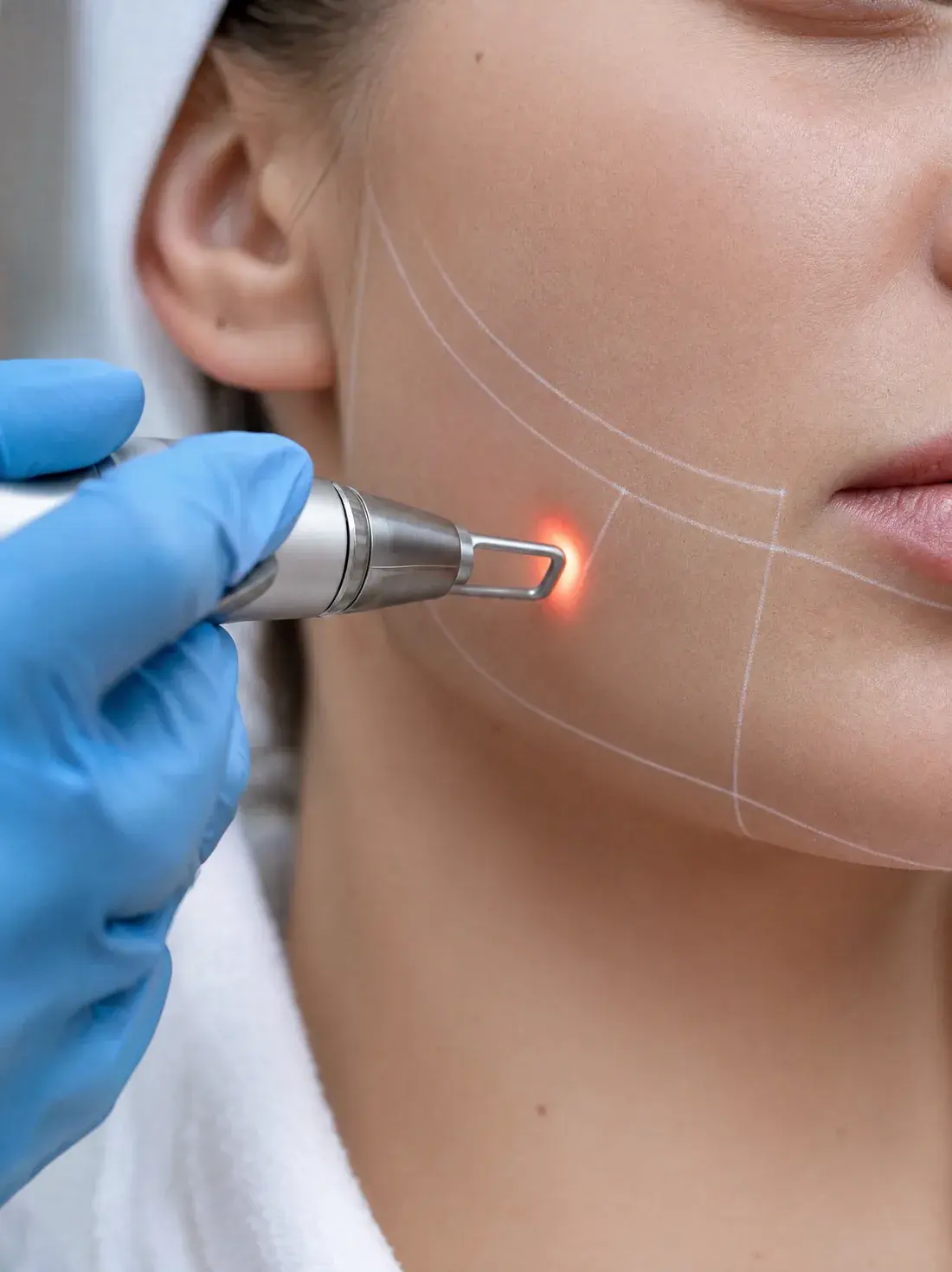
Laser skin rejuvenation is a broad term for treatments that deliver targeted energy into the skin. Different wavelengths and devices are used for different concerns — some target pigment and discolouration, some target visible vascularity such as redness or fine vessels, and others work on surface texture and resurfacing.
The energy is intended to act on a specific target in the skin — for example, pigment or small blood vessels — while the surrounding skin is kept as undisturbed as possible. Resurfacing settings instead work on the skin surface to prompt renewal. Because the right wavelength and intensity depend on the concern and the skin, there is no single fixed setting.
At Shookra, your clinician assesses your skin and selects the device, wavelength and setting accordingly. Skin tone matters here: assessment accounts for factors such as past sun exposure and skin type, since the wrong setting can affect pigmentation — particularly important for deeper or darker skin tones. Treatment is carried out under doctor-led clinical protocols, and a patch test may be considered before a full session.
What Is Laser Skin Rejuvenation Good For?
Laser skin rejuvenation is a pigment-and-texture treatment. It is most useful for sun damage, uneven tone, dullness and early textural change — the concerns this climate produces most, given that ultraviolet exposure here is significant year-round rather than seasonal.
Pigment is the strongest indication. Discrete sun spots and generalised unevenness respond well because the laser targets melanin directly, and lower-energy full-face passes are used for overall dullness and early sun damage — often described as laser toning. Where the pigment is a chronic, hormonally driven pattern, melasma is treated far more cautiously and light-based work is introduced late rather than first. Broader hyperpigmentation is typed before it is treated.
What it does not do: it does not tighten meaningfully loose skin or rebuild deep static wrinkles. Where laxity rather than pigment is the concern, radiofrequency microneedling with Morpheus8 is usually the better-matched technology.
Who Is Laser Skin Rejuvenation For?
Laser skin rejuvenation is usually considered by people looking to even out uneven tone, pigmentation and sun-related discolouration, soften rough or uneven texture, refine the look of pores, or improve the skin's overall clarity. It is matched to the concern in front of the clinician rather than applied to a fixed protocol.
It is not right for every skin or every concern, and suitability depends on factors such as skin type, recent sun exposure, current medications and skin condition. Your clinician confirms whether laser is appropriate at consultation, and may suggest an alternative where it suits your skin better.
- Uneven tone and pigmentation
- Rough or uneven texture
- The look of enlarged pores
- Fine lines and early ageing
- Overall clarity and glow
Who it’s not for
A few situations mean it’s better to wait, or to choose a different treatment:
- Recent significant sun exposure, a fresh tan or sunburn on the treatment area
- An active skin infection, broken skin or a cold sore in the treatment area
- Recent isotretinoin use, or a photosensitising medication
- Certain skin types or skin conditions, which the physician assesses for suitability beforehand
This isn’t exhaustive, and none of it rules you out on its own — your clinician confirms suitability at consultation.
Pico vs Older Q-Switched Lasers: What Changed
Picosecond lasers are the current generation for pigment work, and the difference from older nanosecond Q-switched devices is mechanical rather than marketing. It matters most for the skin types most common in Dubai.
| Picosecond | Older Q-switched (nanosecond) | |
|---|---|---|
| How it breaks pigment | Ultra-short pulses shatter pigment mechanically, through a photoacoustic effect. | Relies more on heat to break pigment down. |
| Heat delivered to skin | Lower — which matters, because heat is what provokes pigment-reactive skin. | Higher, with more thermal stress on surrounding tissue. |
| Fragment size | Finer fragments, which the body clears more readily. | Coarser fragments, cleared more slowly. |
| Darker skin tones | Generally the preferred option for Fitzpatrick III–VI, with adapted settings. | Higher risk of post-inflammatory pigmentation in reactive skin. |
| Downtime | Typically minimal — redness and warmth for hours to a day or two. | Often longer, depending on the setting used. |
What to Expect from Laser Skin Rejuvenation
- 01
Assessment & patch consideration
Your clinician assesses your skin, reviews your history, medications and any recent sun exposure, and selects the device and setting. A patch test may be considered first, and pre-care guidance is given where relevant.
- 02
The treatment
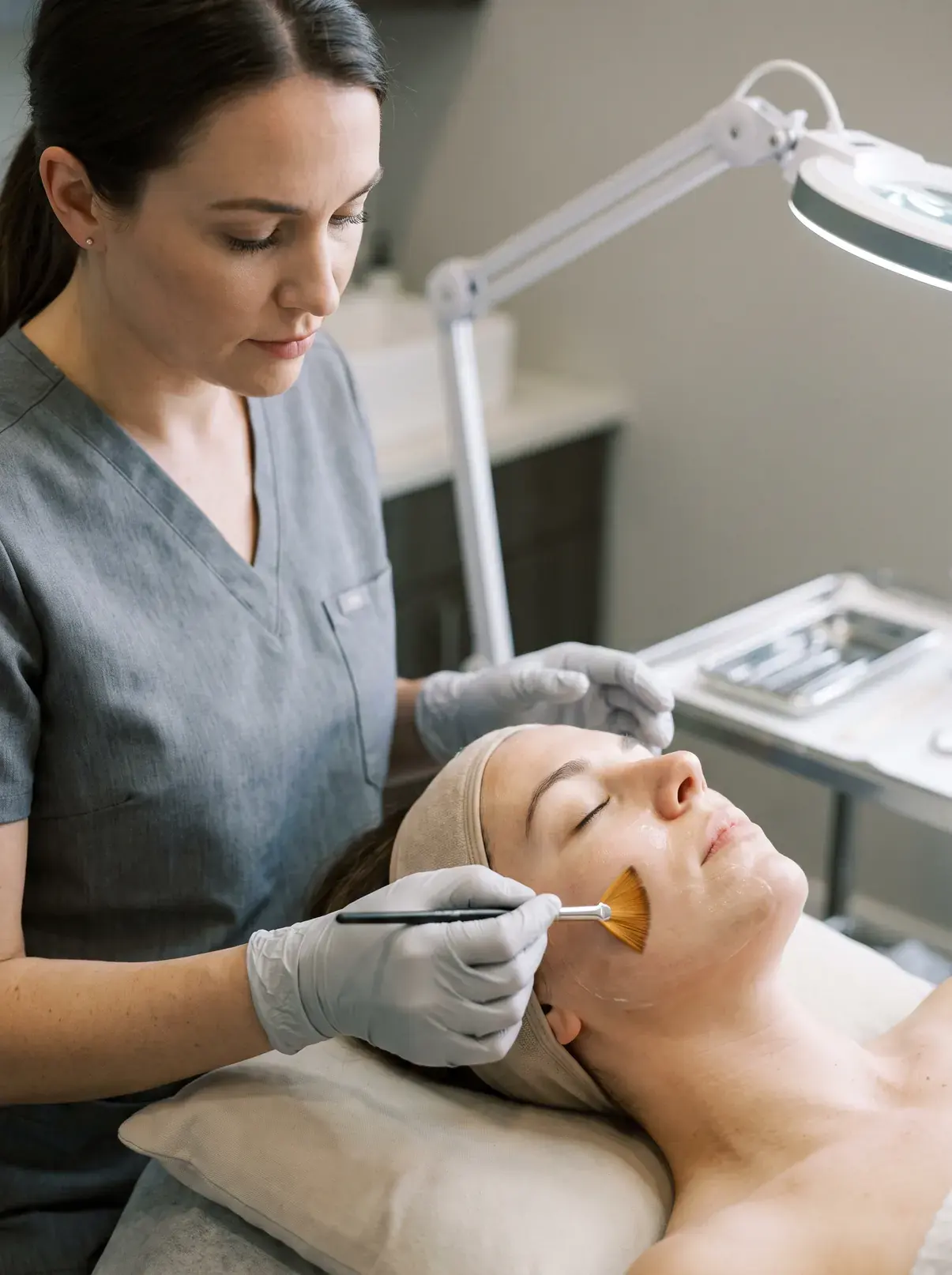
The skin is cleansed and eye protection is worn. The clinician passes the device over the treatment area, delivering measured energy. You may feel warmth or a light snapping sensation, and the session is kept controlled and monitored throughout.
- 03
Aftercare & sun protection
The skin may look pink or feel warm afterwards. You are given aftercare guidance, including gentle skincare and strict broad-spectrum sun protection, which matters a great deal in our climate while the skin settles.
Laser Skin Rejuvenation Results: Sessions and Longevity
Both the number of sessions and how long results hold depend on the indication. Discrete sun spots may improve meaningfully in one to three sessions; general tone and revitalisation are usually planned as a course of three to six sessions spaced around a month apart. Longevity is decided largely by what happens afterwards: cleared pigment does not return by itself, but nothing stops skin producing new pigment if sun exposure continues. Results vary between individuals and skin types.
- First week
- Treated spots often darken slightly and flake off — that is the pigment clearing, not the treatment failing.
- Sessions 1–3
- Discrete sun spots typically show the clearest change in this window.
- Sessions 3–6
- General tone, dullness and early textural change build over a course spaced about a month apart.
- Afterwards
- Daily broad-spectrum SPF 50 is what decides whether the result holds. Unprotected exposure is the fastest way to undo it.
Meet Your Practitioner
On Laser Skin Rejuvenation
With laser, the assessment matters as much as the device. The skill is choosing the right wavelength and setting for the skin in front of you, not reaching for the strongest. I am careful with deeper skin tones, where the wrong setting can affect pigmentation, and I would rather start conservatively and review than overtreat. Consistent sun protection afterwards is part of the treatment, not an afterthought.
 Dr. Nihal HusseinAesthetic & Functional Medicine · DHA-licensed
Why Choose Shookra for Laser Skin Rejuvenation
 01
01Physician-led
Every protocol is planned and supervised by a DHA-licensed doctor.
 02
02Measured, then treated
We read your skin before we treat it, so the plan fits you — not a template.
 03
03Managed over time
Your care is tracked and adjusted as part of one practice, not one-off visits.
 04
04Medical-grade
Clinical protocols and equipment, in a discreet Dubai clinic.
Laser Skin Rejuvenation Questions
01What concerns can laser skin rejuvenation help with?
02Is laser skin rejuvenation safe for darker skin tones?
03Is there downtime, and what is the aftercare?
04How should I prepare for a session?
05How many sessions will I need?
06What does laser skin rejuvenation cost at Shookra?
07Does laser skin rejuvenation really work?
08Do you use a pico laser?
09Is laser treatment safe for darker skin tones?
010How many sessions will I need?
Journal
Related reading
Skin & Dermatology10 min read
Microneedling in Dubai: Collagen Induction for Scars, Pores and Texture
Microneedling in Dubai explained: how collagen induction works on acne scars, pores and texture, safety for darker skin, PRP add-ons, downtime and aftercare.
Read article
Skin & Dermatology8 min read
Chemical Peels in Dubai: Types, Depths and What Your Skin Can Expect
Chemical peels in Dubai explained: superficial, medium and deep peels, what they treat, safety for darker skin tones, downtime and results. Shookra, Business Bay.
Read article
Skin & Dermatology7 min read
Why Pigmentation Is So Common in Dubai: Sun, Heat and Your Skin
Why facial pigmentation is so common in Dubai: sun, heat, hormones and skin trauma. What causes dark spots, how they are treated and when to see a dermatologist.
Read article
Where we do it
Laser Skin Rejuvenation in Dubai
Dubai · Business Bay
ShookraRetail 3, 15, Northside, Business Bay, Dubai, UAE+971 50 320 4553Open Mon–Sun · 10:00–22:00
View on Google MapsDubai · Palm Jumeirah
ShookraAndaz Dubai The Palm, 3rd Floor, Palm Jumeirah Rd, Palm Jumeirah, Dubai, UAE+971 50 320 4553Open Mon–Sun · 10:00–22:00
View on Google MapsLicensed & Regulated
DHA-licensed. MOHAP-approved.
Every treatment is delivered at Shookra, a DHA-licensed medical facility in Dubai. Every physician and clinician on our team is DHA-licensed and works to clinical protocol. Our health communications are independently reviewed and approved by the UAE Ministry of Health & Prevention (MOHAP).
Shookra Polyclinic · DHA Facility Permit #3449309 · MOHAP Advertisement Licence T0UOE5NK-020526

Book a consultation
Book your Laser Skin Rejuvenation consultation.
Speak with our team on WhatsApp — we’ll talk through your goals, suitability and pricing.