Skin & Dermatology12 min read
Ice Pick, Boxcar or Rolling? How to Identify Your Acne Scars
How to tell ice pick, boxcar and rolling acne scars apart at home, why most faces have a mix, and which treatments a dermatologist matches to each type.
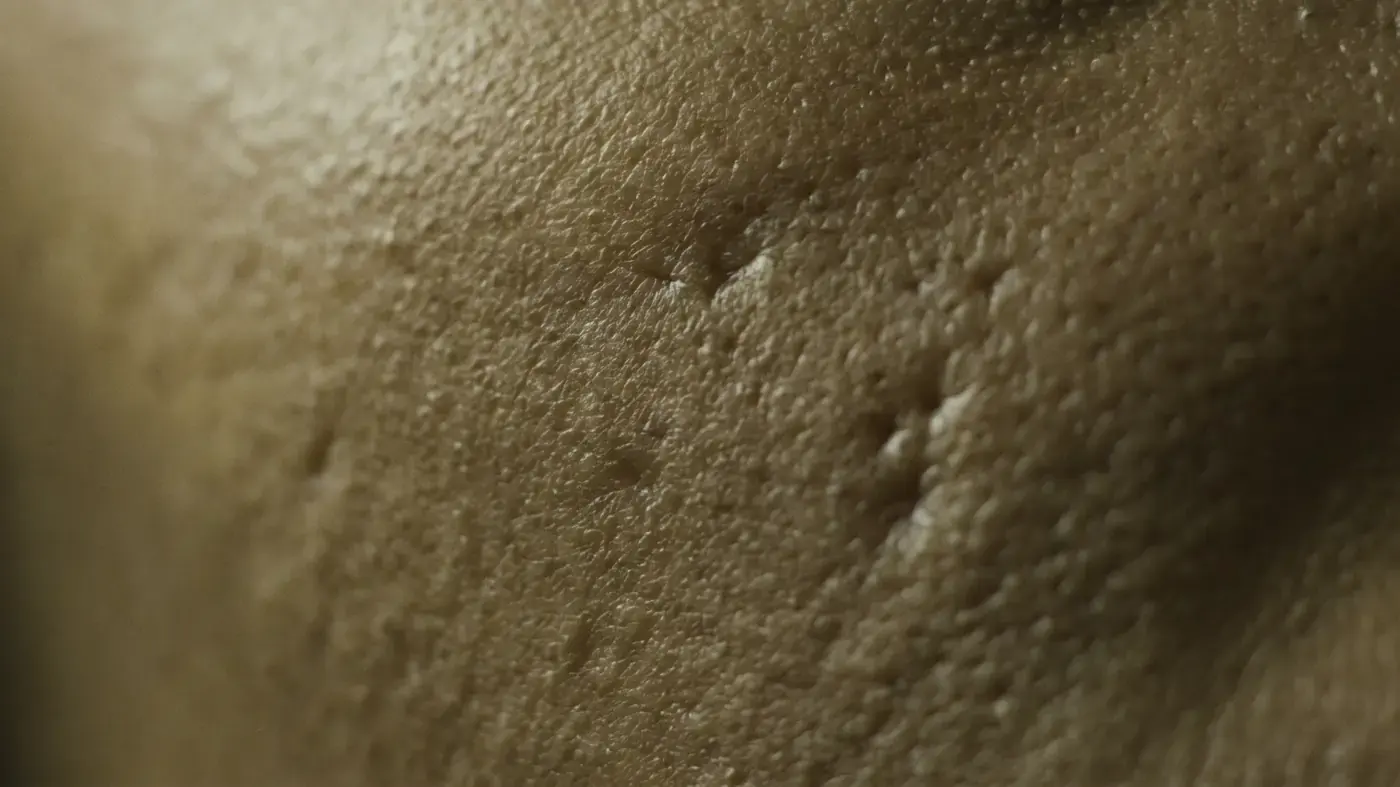
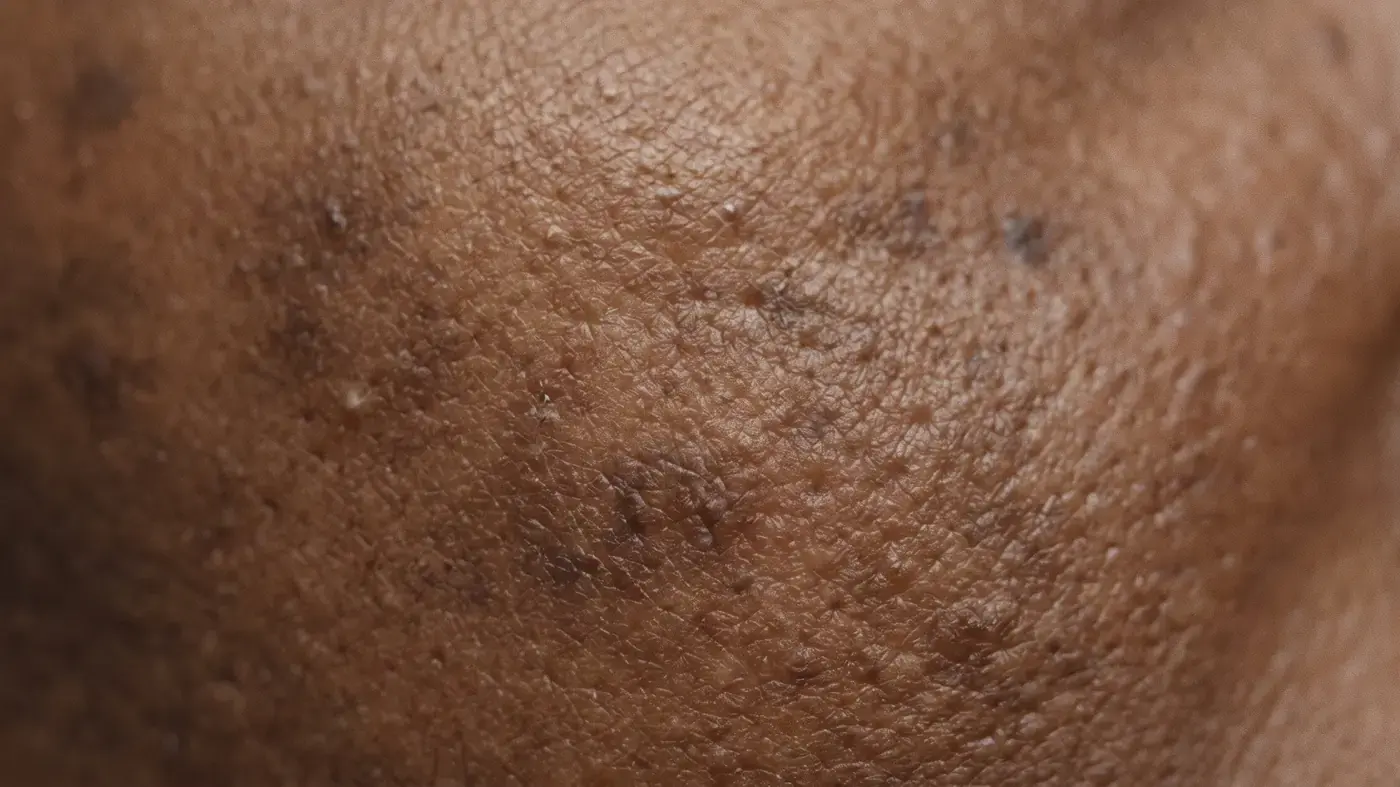
Most people with acne scarring describe it in one of two ways: "my skin looks uneven in certain light" or "I have little holes I can't cover with make-up." Both are accurate, and both point to the same underlying problem. When inflamed acne heals, the skin does not always rebuild the collagen it lost, and the surface is left with small dips of different shapes and depths.
Those shapes matter. Dermatologists sort acne scars into types because each type sits at a different depth and responds to different tools. A treatment that softens one kind of scar may do very little for another, which is why a single treatment rarely addresses every scar. Our page on acne scar treatment in Dubai explains how a dermatologist builds a plan around this.
This guide covers the main types of acne scars, simple checks you can do in a mirror to work out which you have, why some scars are more stubborn than others, and what tends to be matched to each type. It is written with skin in a sun-intense climate like Dubai's in mind, where pigmentation and scarring often appear together.
What are the main types of acne scars?
There are two broad families of acne scars. Atrophic scars are depressions where collagen was lost, and they are by far the most common. They include ice pick, boxcar and rolling scars. Hypertrophic and keloid scars are raised, caused by too much collagen, and are more common on the jawline, chest and back.
Atrophic scars outnumber raised scars by a wide margin. In a widely used classification published by Jacob and colleagues in 2001, ice pick scars made up the majority of atrophic acne scars, followed by boxcar and then rolling scars, although most people have more than one type at the same time.
Ice pick scars
Ice pick scars are narrow, deep and sharply defined, usually less than 2mm across at the surface. They look like an enlarged pore or a small puncture, and they narrow as they go deeper into the skin, a little like a V. Because they are so deep relative to their width, they are often the most stubborn type to improve.
They are most common on the cheeks and temples, and they tend to be scattered rather than clustered.
Boxcar scars
Boxcar scars are wider, round or oval depressions with steep, well-defined edges and a relatively flat base. They range from shallow to deep and can look like small craters or chickenpox scars. Their sharp walls catch shadow, which is why make-up tends to settle into them rather than hide them.
Shallow boxcar scars generally respond better than deep ones, and the edge of the scar is often as much of a concern as its depth.
Rolling scars
Rolling scars are broad, soft-edged dips that give the skin a gently undulating, wave-like look. They are caused by bands of fibrous tissue beneath the skin pulling the surface down, a process called tethering. Their edges are indistinct, so they are often invisible under flat bathroom lighting and very obvious in side light or in photographs.
Because the problem sits underneath the surface, rolling scars usually respond best to treatments that work at depth.
Raised scars: hypertrophic and keloid
Hypertrophic scars are firm, raised scars that stay within the boundary of the original spot and may flatten slowly over time. Keloid scars grow beyond the original wound, can keep enlarging, and may itch or feel tender. Both are more common on the jawline, chest, shoulders and back, and keloids are more common in people with deeper skin tones and those with a family history of them.
A known tendency to keloid scarring is important information for any clinician, because some treatments that help depressed scars can aggravate raised ones.
How can you tell which type of acne scar you have?
You can get a reasonable idea at home with good light and a mirror. Look at your skin with a single light source to one side rather than overhead, gently stretch the skin, and note the width and edge of each scar. A dermatologist confirms the mix at consultation, often with angled light and magnification.
Three simple checks help:
- The side-light check. Stand with a window or lamp to one side of your face rather than in front. Rolling scars become visible as soft shadows; boxcar scars show crisp edges; ice pick scars look like small dark points.
- The stretch check. Place two fingers either side of a scar and gently spread the skin. Rolling scars tend to soften or almost disappear when stretched, because the skin around them is lifted. Boxcar and ice pick scars largely remain.
- The width check. If the opening is tiny and the scar looks deep, it is likely an ice pick scar. If it is roughly 1.5 to 4mm across with steep edges and a flat floor, it is likely a boxcar scar.
Is it a scar or a dark mark?
Many people who think they have acne scars actually have flat marks. A dark brown or grey mark that is level with the skin is post-inflammatory hyperpigmentation, extra pigment left by inflammation rather than a change in texture. A pink, red or purple mark that is flat is post-inflammatory erythema, caused by small blood vessels.
The difference matters, because flat marks usually fade with time and the right care, while true scars change the skin's structure. Our guide to post-inflammatory hyperpigmentation explains how dark marks are treated, and the two often need tackling in a particular order.
Why do some people scar and others do not?
Acne scarring follows inflammation that reaches deep enough to damage the collagen framework beneath a spot. The risk rises with the depth and duration of the breakout, so nodular and cystic acne scar far more often than surface congestion does. Picking, squeezing, a delay in treating active acne and a genetic tendency to scar all increase the risk.
Scarring is a healing outcome, not a personal failure. Some people with relatively mild acne scar easily, while others with severe acne heal with very little visible change, and family history plays a part.
The most reliable way to prevent new scars is to bring active acne under control early. If breakouts are still appearing, treating them is usually the first step, because new inflammation can create new scars while old ones are being treated. Our dermatology page on acne treatment explains how this is approached, and our article on adult acne in Dubai covers the common local triggers.
Which type of acne scars are permanent?
Atrophic acne scars, the ice pick, boxcar and rolling types, are generally permanent in the sense that they do not resolve on their own. Treatment can improve their depth and appearance, often meaningfully, but rarely erases them completely. Flat red or dark marks, by contrast, are not true scars and usually fade with time.
That is not a reason for discouragement. A well-planned course can often improve texture noticeably, although results vary with scar type, depth and skin type, and the goal is usually smoother, more even skin that is easier to live with rather than perfect skin. A realistic conversation at the start about what is achievable for your scar types is part of good care.
How are different types of acne scars treated?
Each scar type is usually matched to a different approach. Rolling scars tend to respond to collagen remodelling at depth, such as radiofrequency microneedling. Boxcar scars often need a combination of resurfacing and remodelling. Ice pick scars usually need focal techniques applied to individual scars. Most plans combine several methods over months.
The pairings below are general guidance rather than a prescription. A dermatologist weighs your skin type, the mix and depth of your scars, any active acne and your tolerance for downtime before recommending anything.
Rolling scars: remodelling beneath the surface
Because rolling scars are caused by tethering underneath the skin, treatments that work below the surface tend to help most. Morpheus8, a form of radiofrequency microneedling, delivers controlled heat through fine needles to stimulate new collagen in the deeper layers. It is typically planned as a short course spaced several weeks apart, with mild redness that usually settles within days. Results vary between individuals and skin types. Standard microneedling works on a similar principle at a shallower level, and is sometimes combined with PRP, a preparation made from your own blood that is used to support skin repair.
Where tethering is pronounced, a dermatologist may also discuss techniques that release the fibrous bands directly before remodelling.
Boxcar scars: softening the edge and lifting the base
Boxcar scars have two problems at once: a sharp edge and a sunken floor. Plans often combine resurfacing, which softens the rim so it casts less shadow, with collagen remodelling underneath. Medium-depth chemical peels are one option for resurfacing, alongside energy-based treatments selected for your skin type. Shallow boxcar scars generally respond more readily than deep ones.
Ice pick scars: focal treatment, one scar at a time
Ice pick scars are too narrow and deep for whole-face treatments to reach effectively on their own. They are usually treated individually with focal techniques, for example applying a concentrated acid precisely to the base of each scar, or removing a scar with a tiny punch and closing the skin. Which, if any, of these suits you is a decision for a dermatologist after examining your skin, and it is often combined with whole-face treatment for the surrounding texture.
Raised scars: a different approach
Hypertrophic and keloid scars are not treated with the remodelling approaches above, because stimulating collagen can make them worse. They are usually managed with options such as steroid injections into the scar, silicone gels or sheets, and pressure, under medical supervision. If you have a history of raised scarring anywhere on your body, mention it at your consultation.
What should you know about acne scar treatment in Dubai?
In Dubai, the main considerations are skin type, sun exposure and timing. Many residents have medium or deeper skin tones, which are more prone to dark marks after inflammation, so heat-based treatments need conservative settings and careful preparation. Year-round sun means strict protection before and after treatment, and the cooler months are often a practical window to start.
A few practical points come up often:
- Pigment first, or together. In deeper skin tones, textural scars are often accompanied by post-inflammatory pigmentation. Treating pigment before or alongside texture can reduce the risk of new marks.
- Sun protection is part of the treatment. Skin that is healing from resurfacing or microneedling is more sensitive to ultraviolet (UV) light. Daily broad-spectrum sunscreen, ideally tinted for pigment-prone skin, matters as much as the procedure itself. Our article on why pigmentation is so common in Dubai explains why.
- A recent tan changes the plan. If you have just returned from a beach holiday, your clinician may advise waiting before peels or energy-based treatments.
- Patience. Collagen remodels gradually. Improvement usually becomes visible over several months after a course of treatment rather than immediately.
Can skincare improve acne scars?
Skincare cannot fill in true atrophic scars, but it can help. Retinoids may modestly improve skin texture over time and help control the acne that causes new scars. Ingredients such as azelaic acid, niacinamide and vitamin C can fade the dark marks that often sit alongside scars, making texture look less obvious. Daily sunscreen helps stop marks darkening.
Be wary of products marketed as scar "erasers" or quick fixes. Over-exfoliating in an attempt to buff scars away tends to irritate the skin and, particularly in deeper skin tones, can leave new pigmentation behind.
Frequently asked questions
Can ice pick scars be removed?
Ice pick scars can often be improved, but they are the most stubborn type of acne scar because they are narrow and deep. They usually need focal techniques targeted at individual scars rather than whole-face treatment alone. A dermatologist can advise whether your scars are suitable for these methods and what level of improvement is realistic.
Do boxcar scars go away on their own?
No. Boxcar scars are a change in the skin's structure, so they do not resolve on their own, although they can look less obvious as surrounding redness or pigmentation fades. Shallow boxcar scars generally respond well to a combination of resurfacing and collagen remodelling, while deeper ones may need additional focal treatment.
What is the difference between atrophic and hypertrophic acne scars?
Atrophic acne scars are depressions caused by a loss of collagen as a spot heals; ice pick, boxcar and rolling scars are all atrophic. Hypertrophic scars are raised, caused by too much collagen, and stay within the original wound. Keloids are also raised but extend beyond the original area. They are treated very differently.
When should I start treating acne scars?
Ideally once active acne is under control, because new breakouts can create new scars and interfere with healing after treatment. That does not always mean waiting until skin is completely clear. A dermatologist can often treat active acne and early scarring in a planned sequence, and starting sooner may help limit long-term scarring.
How many sessions does acne scar treatment take?
It depends on your scar types, their depth and the treatments used. Most plans involve a course of several sessions spaced weeks apart, sometimes combining two or three methods, with results developing gradually over months. Your dermatologist can give a clearer estimate after examining your skin.
Knowing your scars is the first step
Most faces carry a mix of ice pick, boxcar and rolling scars, sometimes alongside flat marks that are not scars at all. Understanding which you have explains why one treatment rarely does everything, and why a plan built around your specific scars tends to deliver more than a one-size-fits-all approach.
If you would like a clear picture of your scar types and the options that suit your skin, book a consultation with our dermatology team in Business Bay. Dr. Aishani Shah, our Specialist Dermatologist, can map your scars, discuss realistic expectations and help you decide whether, when and how to treat them.
Want this for your own biology?
Speak with our team on WhatsApp — we’ll point you to the right protocol, or to a measurement first.