Hair11 min read
Hair Transplant Recovery Timeline: What to Expect, Month by Month
What happens after a hair transplant, from crusts and shock loss to new growth and the final result, with Dubai aftercare tips and red flags to know.
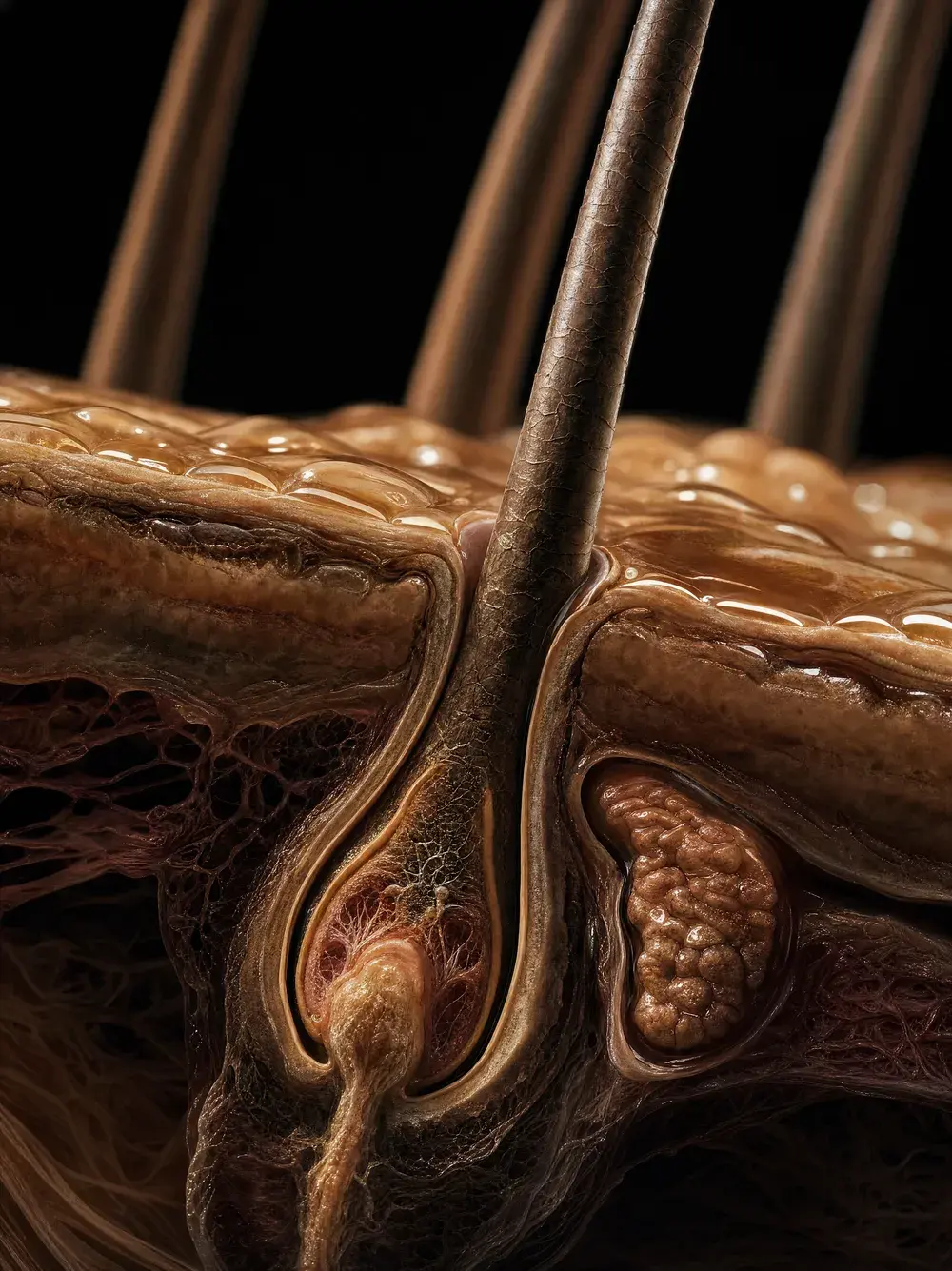
The day of a hair transplant is often surprisingly calm. It is the year that follows that tests people's patience. Transplanted hair does not simply keep growing from the day it is placed: it crusts over, falls out, rests and then returns slowly, and many of the worries people have afterwards come from not knowing that sequence in advance.
This guide walks through a typical hair transplant recovery timeline, from the first night to the final result, including the shedding phase that catches many people out and the practical side of recovering in Dubai's heat. It describes what commonly happens rather than what will happen to you: healing and growth vary between individuals, and your own clinic's aftercare instructions take priority. If you are still weighing up the procedure itself, our page on how a hair transplant works at Shookra explains the techniques, suitability and planning involved.
How long does hair transplant recovery take?
Most people are back at desk work within a few days, and the visible crusting around the grafts usually clears within about ten days. Hair growth takes far longer: transplanted hairs typically shed within the first two months, regrowth starts around months three to six, and the result settles from about nine to twelve months.
It helps to think of recovery as two overlapping timelines. The first is skin healing, which is largely complete within the first few weeks. The second is the hair growth cycle, which runs on its own biological clock and cannot be hurried. Some people see further refinement up to around eighteen months, and the crown can take longer than the hairline.
What happens in the first two weeks after a hair transplant?
The first fortnight is about protecting the grafts while the scalp heals. Expect tenderness and tightness, possible swelling across the forehead in the first few days, and small crusts forming around each graft. You will be given a precise washing routine, and following it closely matters more than anything else in this period.
Days 1 to 3: rest, swelling and sleeping position
Once the local anaesthetic wears off, the scalp usually feels tight and tender rather than painful, and a mild headache is common. Swelling often appears on the second or third day, starting at the forehead and occasionally reaching the eyes, before settling. Sleeping with the head raised on extra pillows is commonly advised for the first few nights, and a travel pillow can stop you rolling onto the grafts. Bending forward and heavy lifting should be avoided for now.
Washing your hair after a hair transplant
Most clinics start a gentle washing routine within a day or two, using a prescribed shampoo or foam, lukewarm water and a pouring or dabbing technique rather than rubbing. The aim is to keep the area clean and soften the crusts so they lift naturally. Do not pick, scratch or comb the recipient area, and pat rather than towel-dry.
Days 4 to 14: crusts, itching and settling
The small scabs around each graft gradually loosen, most often clearing within a week to ten days. Itching is common as the skin heals and tends to peak during this phase. Pinkness in the recipient area can last several weeks, particularly in fairer skin. The grafts are generally considered settled once the crusts have cleared, which is why restrictions in this window are the strictest.
How does the donor area heal after a hair transplant?
The donor area at the back and sides of the scalp usually heals quickly. With FUE, follicles are removed one at a time, leaving small dot-like wounds that form tiny scabs and typically close within a week or two. Tenderness, mild itching and temporary numbness are common, and short regrowth soon covers the area.
Because DHI and sapphire FUE are variations on FUE, the donor area heals in much the same way whichever is used. Once healed, FUE leaves small dot scars spread across the donor area rather than a single line, generally hard to see once the hair has grown, depending on how short you wear it and how your skin heals.
Small pimples can also appear as hairs regrow through the healing skin, and these usually settle on their own. Numbness typically fades over several weeks, occasionally a few months, as small nerves recover. Either one that is getting worse rather than better is worth reporting.
What is shock loss after a hair transplant, and is it normal?
Shock loss is the shedding of transplanted hairs, usually between about two and eight weeks after surgery. It is expected: the follicle stays in place beneath the skin and enters a resting phase before producing new hair. Some people also notice temporary thinning of their existing hair around the treated area.
This is the stage that unsettles people most, because the scalp can look much as it did before, sometimes slightly thinner. The amount of shedding varies widely. Shedding of nearby native hair is thought to reflect the stress of the procedure on surrounding follicles and is usually temporary, although hair that was already weakening from pattern hair loss may not all return.
Normal shedding does not need treating, and resisting the urge to judge your result during these weeks is genuinely useful advice. For the wider picture, our guide to how much hair shedding is normal explains the hair growth cycle in more detail.
When will you see new hair growth after a hair transplant?
New growth commonly begins around months three to four, starting fine and sometimes slightly wiry. By around six months many people see a visible change, with density and texture continuing to improve to nine to twelve months and, for some, up to about eighteen months. Results vary between individuals and between areas of the scalp.
A rough guide to how that can unfold:
- Months 3 to 4: early growth. Fine, thin hairs appear, often unevenly. Small pimples can form as new hairs push through.
- Month 6: a visible difference. Many people notice a change, though hairs are still thickening and progress is often uneven.
- Months 9 to 12: the result takes shape. Density and texture become more natural as hairs mature. This is usually when the outcome can be judged.
- Months 12 to 18: final refinement. Some people, particularly those who had crown work, see continued improvement in thickness.
How much growth you see depends on your donor hair, the area treated, how you heal and how your native hair behaves over the same period. Beard and eyebrow transplants follow a broadly similar sequence, and your doctor will tailor the aftercare to the area treated.
When can you return to work, exercise and everyday life?
Desk work is often possible within a few days, although crusting stays visible for roughly the first week to ten days. Strenuous exercise, swimming and direct sun exposure are restricted for longer, commonly a matter of weeks rather than days. Your clinic will give you specific timings based on your procedure and how you are healing.
Typical points to discuss with your doctor:
- Work. Office roles can usually resume within a few days if you are comfortable being seen with crusts. Physical or outdoor work needs longer.
- Exercise. Gentle walking is usually fine early on. Gym sessions, running and heavy lifting raise blood pressure and sweating, so they are commonly paused for around two weeks or more.
- Headwear. Loose, clean headwear may be allowed after a few days, while tight caps, helmets and anything that presses on the grafts are usually avoided for longer. This applies to a ghutra, a hijab or a cap alike, so ask how and when to wear yours.
- Prayer. If you pray, ask your doctor in advance about the early days. Lowering the head can increase swelling, and the grafted hairline should not press against a prayer mat, so your doctor can suggest practical adjustments.
How does Dubai's climate affect hair transplant recovery?
Heat, sweat and strong sunshine all make early recovery more demanding. In Dubai, that usually means limiting time outdoors in the first weeks, keeping the scalp cool and clean, protecting healing skin from direct sun, and staying out of pools and the sea until your doctor confirms you have healed.
- Heat and sweat. Heavy sweating can irritate healing skin and makes the area harder to keep clean, so many people plan their first week around air-conditioned surroundings. Some choose the cooler months for their procedure.
- Sun protection for the scalp. Healing skin is more sensitive to UV. Shade and, once permitted, a loose hat are the usual first line; ask when sunscreen can go on the scalp, as products are typically kept off until the skin has healed.
- Pools and the sea. Chlorinated pools and seawater are commonly avoided for several weeks to reduce the risk of irritation and infection.
- Tap water. There is little evidence that the city's water harms hair follicles, as we explain in what hard water can and can't do to your hair.
Will you need other treatments after a hair transplant?
Often, yes, though not for the transplanted hair itself. The native hair around the grafts is still subject to whatever caused the loss, so a doctor may discuss ways to help maintain it. Depending on your diagnosis, that might include medical treatment, in-clinic options or simply regular review.
A transplant moves hair; it does not stop pattern hair loss from continuing. If the hair behind a new hairline keeps thinning, the result can look less natural over time. Depending on your history, a doctor may discuss medicines such as minoxidil or, for some men, finasteride, including their potential side effects and whether they are appropriate for you.
Once the scalp has fully healed, PRP for hair, prepared from a small sample of your own blood, is sometimes used to support native hair, and microneedling for hair or scalp mesotherapy may form part of a wider plan. The evidence varies, results differ between individuals, and timing is a decision for your doctor. For a balanced look at the research, read PRP for hair: what the evidence supports.
When should you contact the clinic after a hair transplant?
Contact your clinic promptly if you notice increasing redness, warmth or swelling after the first few days, pus or a yellow discharge, a fever, pain that is severe or getting worse, bleeding that does not stop with gentle pressure, or numbness that is not improving after a few months.
Other reasons to get in touch include:
- Swelling around the eyes that is still increasing after the fourth or fifth day.
- Painful, enlarging lumps, rather than small pimples that settle on their own.
- Grafts that look dislodged, for example after a knock to the head.
- Any symptom that worries you. Asking early is better than waiting.
These are general warning signs, not a substitute for the instructions your clinic provides.
How recovery is supported at Shookra
At Shookra in Business Bay, hair transplants are planned and performed by Dr. Amar Helali, our Hair Transplant Physician, whose practice centres on hair restoration. Aftercare is explained before the procedure, so you know what the washing routine involves, which activities to pause and what each stage of the timeline is likely to look like in your case. Progress is reviewed through the year that follows, and the conversation about your native hair continues alongside it. If you are earlier in the process, our hair restoration services start with assessing the cause of hair loss.
Frequently asked questions
When does itching stop after a hair transplant?
Itching is common while the scalp heals and usually peaks while the crusts are forming and lifting, during the first one to two weeks. It typically eases over the weeks that follow. Avoid scratching, as it can disturb the grafts, and ask your clinic what you can use if the itching becomes uncomfortable.
Is head pain normal after a hair transplant?
Tightness, tenderness and a mild headache are common in the first few days and are usually managed with the pain relief your clinic advises. Pain that is severe, that worsens after the first few days, or that comes with fever or spreading redness should be reported to your clinic promptly.
Do all hair transplants go through shock loss?
Most people shed many of the transplanted hairs within the first two months, but the amount varies, and some keep more than others. Shedding of surrounding native hair is less predictable. Either way, shedding at this stage is expected and is not a sign that the procedure has failed.
Is it normal to have scabs in the donor area after a hair transplant?
Yes. Each extraction site forms a tiny scab that usually falls away within a week or two, alongside some redness and tenderness. Gentle washing as instructed helps the scabs lift on their own. Increasing redness, discharge or pain in the donor area is worth reporting to your clinic.
Patience, planning and realistic expectations
A hair transplant recovery timeline is long, but it is broadly predictable, and knowing what each stage looks like makes the waiting easier. The crusts, the shedding and the slow, uneven early growth are all part of the normal sequence, not signs that something has gone wrong.
If you are considering a hair transplant, or would like to know whether you are a suitable candidate, book a consultation with our team. An honest assessment of your donor area, your pattern of loss and your recovery is the right place to start.
Want this for your own biology?
Speak with our team on WhatsApp — we’ll point you to the right protocol, or to a measurement first.