Body & Weight8 min read
What Causes a Double Chin, and What Can Actually Help?
Why a double chin forms even in slim people, whether chin exercises work, and how fat, skin laxity and jaw shape each point to different options.

Few things are as quick to make someone unhappy with a photo as a double chin. It shows up in video calls, in candid shots taken from below and in the bathroom mirror under harsh lighting, and it often appears in people who are otherwise slim and active.
A double chin is not one single problem. It can be caused by fat, by loosening skin, by the shape of the jaw, or by posture, and usually by a combination. That matters, because each cause points to a different solution, and the treatment that suits one person can do very little for another.
This guide explains what causes a double chin, what you can realistically change yourself, and how a doctor in Dubai would think about the options if you are considering treatment. If a fuller area under the chin is your main concern, our injection lipolysis page explains one non-surgical option in detail.
What is a double chin?
A double chin is a fullness or fold beneath the jawline that blurs the angle between the chin and the neck. Doctors call the area the submental region. The fullness may come from a pocket of fat under the chin, from skin and muscle that have lost firmness, or from the underlying structure of the jaw and neck.
What causes a double chin?
A double chin is usually caused by one or more of four things: extra fat under the chin, skin that has lost elasticity with age, a jaw and chin shape that gives less definition to the neck, and posture. Genetics play a large part in where your body stores fat, which is why a double chin can appear even in slim people.
Fat under the chin
The area under the chin is one of the places the body tends to store fat. Some people store fat there readily because of their genetics, even at a healthy weight, while for others it appears with weight gain. Fat here can be stubborn and is often one of the last places to change when you lose weight.
Skin laxity and ageing
From our mid-twenties onwards, the skin's collagen and elastin gradually decline, and sun exposure speeds this up. As skin and the thin muscle of the neck, the platysma, lose firmness, the jawline softens and skin can gather beneath the chin. In Dubai, where UV levels are high all year round, sun protection on the neck is easy to forget and matters more than many people realise.
Jaw and chin structure
A smaller or set-back chin, or a lower position of the hyoid bone in the neck, gives less of a defined angle between the chin and neck. This can create the appearance of a double chin even when there is very little fat, and it explains why some people have had one since their teens.
Posture and the camera angle
Looking down at a phone or laptop for hours pushes the head forward and folds the soft tissue under the chin. It does not create fat, but it can make an existing fullness much more visible, especially on video calls where the camera sits below eye level.
Can you get rid of a double chin with exercises?
There is little evidence that chin or jaw exercises reduce fat under the chin, because the body does not burn fat selectively from the area being exercised. Exercises and better posture may help the neck look more toned and upright, but they will not remove a pocket of fat or tighten loose skin.
That does not mean they are pointless. Strengthening the neck and upper back, raising screens to eye level and becoming more aware of how you hold your head can all improve how the jawline looks day to day. They are simply not a substitute for addressing fat or skin laxity if those are the main causes.
Will losing weight get rid of a double chin?
If your double chin is mainly caused by fat and you are carrying extra weight, losing weight can reduce it. But fat under the chin is often resistant, and it may stay when the rest of the body changes. If the cause is genetic fat distribution, skin laxity or jaw structure, weight loss alone is unlikely to make much difference.
Gradual, sustainable weight loss through diet, activity and sleep is good for your health regardless. It is also worth reaching a stable weight before considering any treatment for the area, because significant weight changes afterwards can affect the result.
What treatments are available for a double chin?
Treatments for a double chin fall into three groups: those that reduce fat (injection lipolysis, fat freezing or liposuction), those that tighten skin (such as focused ultrasound), and those that improve structure (such as chin filler). The right option depends on which cause is behind your double chin, and some people may benefit from a combination.
Reducing fat under the chin
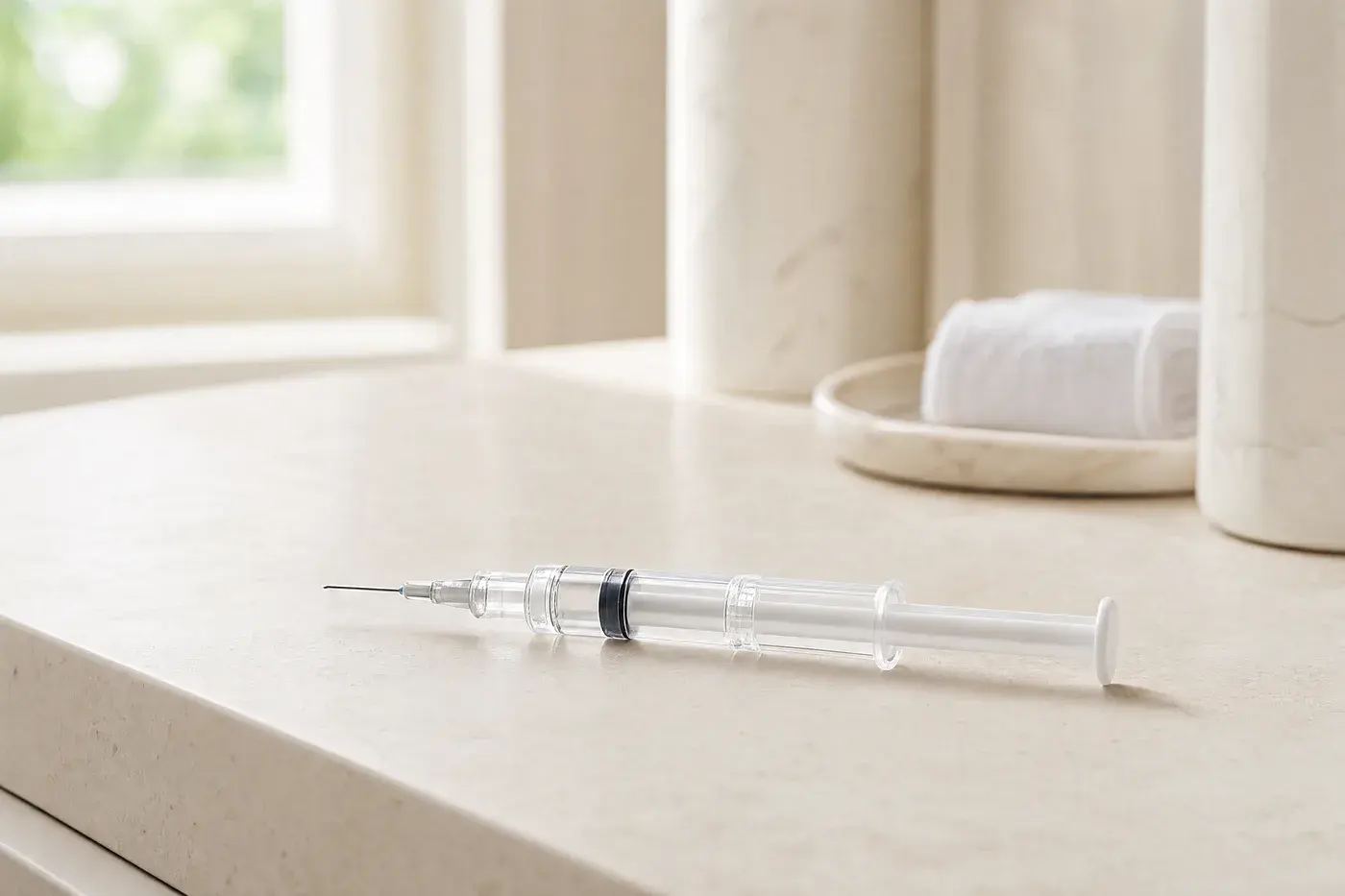
Injection lipolysis. A course of small injections delivers a solution into the fat beneath the chin, breaking down fat cells, which the body then clears gradually. Clinical trials of injectable fat-reduction treatments for this area have typically used a course of several sessions spaced about a month apart, with results building over weeks. Swelling, tenderness, bruising and numbness are common after each session, usually for several days, although numbness can last a few weeks. Our injection lipolysis page explains the process.
Fat freezing. Cryolipolysis uses controlled cooling to target fat cells, which the body then clears over the following weeks and months. It is used for areas including under the chin in suitable people. Redness, numbness and tenderness are common afterwards, and rarely the treated area enlarges rather than shrinks, a reaction called paradoxical adipose hyperplasia. Our cryolipolysis page explains who it can suit.
Double-chin liposuction. For a larger or very defined pocket of fat in someone with good skin elasticity, submental liposuction removes fat through fine cannulas. It is a surgical procedure with a recovery period, and the details are covered on our double-chin liposuction page.
Tightening the skin
Where mild to moderate skin laxity is the main issue, energy-based treatments that work on collagen may help firm the jawline and neck over time. HIFU delivers focused ultrasound into the deeper layers of the skin and is commonly used for the jawline, under the chin and the neck. It is better suited to early laxity than to heavy, loose skin. Temporary redness, swelling and tenderness are common, and results develop gradually over the following months.
Improving the chin and jawline
When a set-back chin is part of the picture, adding projection to the chin can sharpen the angle between the chin and neck. Dermal fillers are commonly used for the chin and jawline. Results are temporary, and maintenance treatments are needed. Swelling and bruising are common, and rare but serious complications include a filler blocking a blood vessel, which is one reason this should only be done by a medical professional.
When surgery is the more honest answer
Where there is significant skin laxity, or the muscle bands of the neck are prominent, non-surgical treatments may offer limited change. In those situations a surgeon may discuss a neck lift, sometimes as part of a facelift. It is better to hear this at consultation than to spend time and money on treatments that cannot address the cause.
What are the risks of double chin treatments?
All treatments for the area carry some risk, and these vary by option. Swelling, bruising, tenderness and temporary numbness are common after injection lipolysis and liposuction. Less commonly, the nerve that controls the corner of the mouth can be irritated, causing a temporarily uneven smile, and some people notice brief difficulty swallowing. Uneven contour, skin irregularity and, rarely, infection are also possible.
This is why a medical assessment matters. A doctor should examine the area, check your medical history and medications, and explain which option fits your anatomy, what result is realistic and what the recovery involves.
Frequently asked questions
Why do I have a double chin when I'm slim?
Genetics influence where your body stores fat, so some people carry a pocket of fat under the chin even at a healthy weight. A smaller or set-back chin, a lower position of the neck structures and posture can also create the look of a double chin with very little fat at all.
Can a double chin go away on its own?
If it is linked to weight gain, it may reduce if you lose weight. A double chin caused by genetics, ageing skin or jaw structure is unlikely to go away on its own. Improving posture and screen height can make it less noticeable day to day.
Are double chin treatment results permanent?
Fat cells removed or destroyed by injection lipolysis, fat freezing or liposuction are not thought to grow back, but remaining fat cells can still enlarge with weight gain. Skin continues to age, and fillers are gradually broken down by the body, so maintaining results depends on the treatment, your weight and time.
How many sessions does it take to get rid of a double chin?
It depends on the treatment and the amount of fat. Injection lipolysis and fat freezing are usually given as a course, with results building over weeks to months, while liposuction is typically a single procedure. Your doctor will suggest a realistic plan after assessing the area.
Finding the right approach
A double chin has more than one cause, and a good plan starts with working out which one, or which combination, applies to you. For some people that means a short course of non-surgical treatment, for others skin tightening or a little chin projection, and for a few, a surgical opinion.
If you are considering treatment, book a consultation at Shookra in Dubai. A doctor will assess the fat, skin and structure of the area and talk you through the options that suit your anatomy, along with realistic expectations for each.
Want this for your own biology?
Speak with our team on WhatsApp — we’ll point you to the right protocol, or to a measurement first.