Skin & Dermatology11 min read
Dermal Fillers in Dubai: Lips, Cheeks and Jawline, and How to Get Natural Results
A doctor-led guide to dermal fillers in Dubai: how hyaluronic acid filler works in the lips, cheeks and jawline, safety, aftercare and natural results.
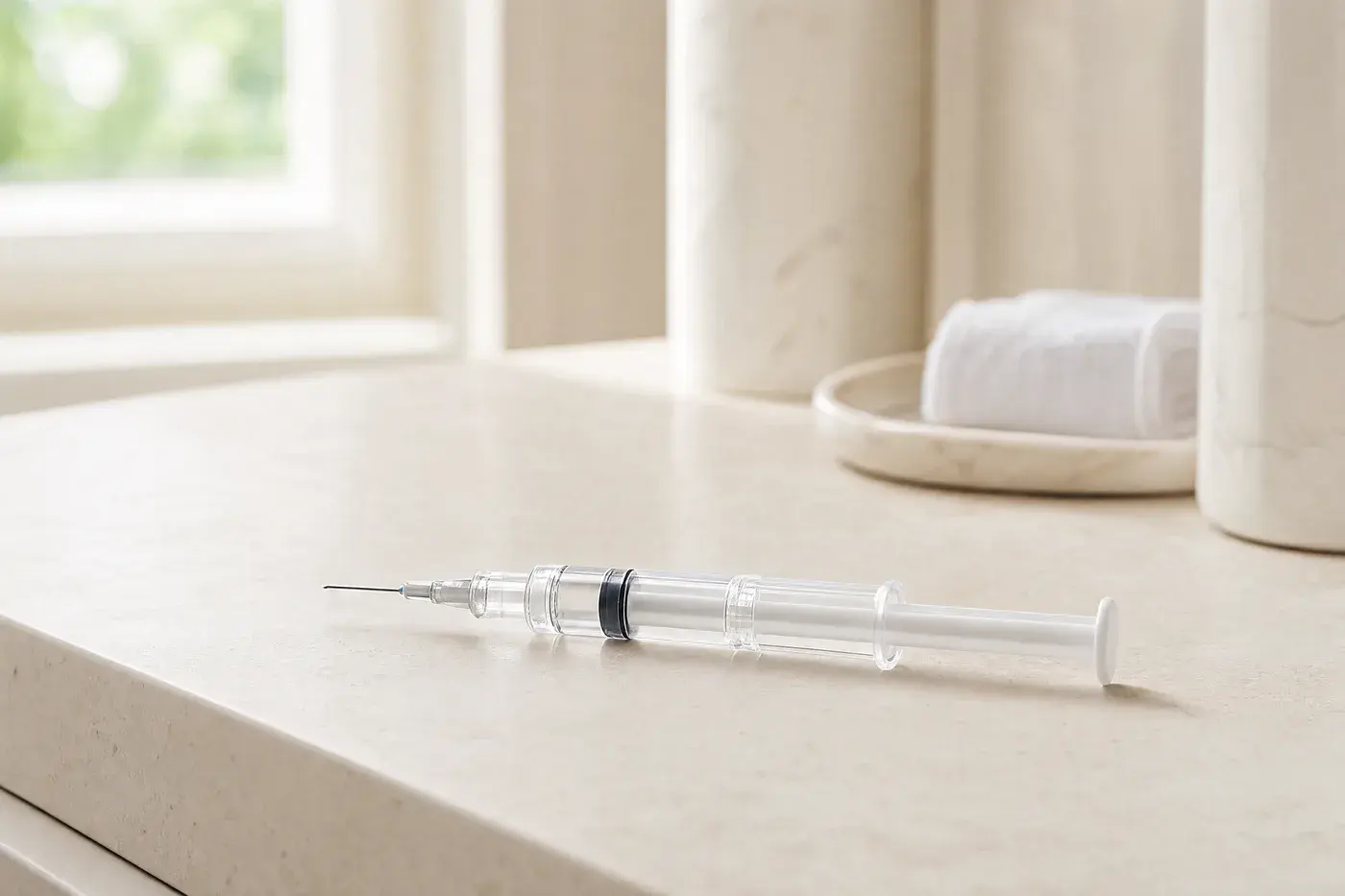
Dermal fillers are one of the most frequently requested cosmetic treatments in Dubai, and one of the most misunderstood. Social media has made a certain look familiar: lips that sit forward of the face, cheeks that look inflated rather than lifted. Many people curious about fillers are understandably worried about ending up there.
The good news is that the overfilled look is not an inevitable result of filler. It usually comes from decisions: too much product, placed in the wrong plane, added too quickly, or used for a problem filler was never designed to solve. This guide explains how hyaluronic acid fillers work in the lips, cheeks and jawline, what a natural appearance actually requires, and how to think about safety, longevity, aftercare and cost. For the treatment itself, including what an appointment involves at our Business Bay clinic, see our dermal fillers treatment page.
What Are Dermal Fillers and How Do They Work?
Dermal fillers are injectable gels, most commonly made from hyaluronic acid, that are placed beneath the skin to restore lost volume, support structure or refine a contour. Hyaluronic acid is a sugar molecule your body already produces. It binds water, which is why a well-placed filler adds soft, natural-feeling volume rather than a hard implant.
Not all hyaluronic acid fillers behave the same way. Manufacturers cross-link the molecule to control how firm the gel is, how much it lifts and how long it resists being broken down. A firmer, more cohesive gel placed deep on the bone can support the cheek or define the jaw. A softer, more flexible gel suits the lips, where the tissue moves constantly when you speak, eat and smile. Matching the product to the area is one of the quieter decisions behind a natural result.
Your body gradually metabolises hyaluronic acid filler, so results are temporary and maintenance is needed. Because it can also be broken down with an enzyme called hyaluronidase, most results can be adjusted or dissolved if needed.
Which Areas Can Dermal Fillers Treat?
The most common areas for dermal fillers in Dubai are the lips, the cheeks and mid-face, the chin and jawline, and the under-eye hollow. Each has different anatomy, risks and a different definition of success.
Lips
Lip filler can restore definition to the border of the lip, correct asymmetry, add subtle shape and support hydration. It is the area where restraint matters most, because lip tissue is soft, mobile and quick to look disproportionate. A conservative first treatment, reviewed once swelling has settled, is generally the safer order of work.
Not everyone who asks about lip fillers in Dubai actually needs volume. Many clients are bothered by dryness, fine vertical lines or a loss of softness rather than size. For them, a lip booster may be more appropriate. Lip boosters use a lighter, hydration-focused hyaluronic acid to improve the texture and moisture of the lips without noticeably changing their shape.
Cheeks and mid-face
With age, the mid-face loses both fat and bone support, which can flatten the cheek and deepen the folds running from nose to mouth. Restoring support high on the cheekbone can give a subtle lift and often softens these lower folds indirectly, which is why experienced injectors frequently treat the cheek before, or instead of, the fold itself. The aim is to replace what has been lost, not to create cheekbones that were never there.
Chin and jawline
Chin and jawline filler is used to improve balance in the lower face. A small amount of chin projection can make the profile look more harmonious and, in some faces, can make the nose appear smaller by comparison. Jawline filler places a firmer gel along the bone to sharpen definition, which is requested by both men and women. Planning here is highly individual, and the goal is definition in proportion to the rest of the face.
Tear trough
The under-eye hollow, or tear trough, can be treated with filler in carefully selected clients, but it is one of the most technically demanding areas. The skin is thin, swelling is common, and filler placed too superficially can cause puffiness or a bluish tinge. Many under-eye concerns are caused by pigmentation, thin skin or fluid rather than hollowing, and filler will not help those. Our guide to dark circles under the eyes explains the different causes and how each is typically approached.
Dermal Fillers vs Anti-Wrinkle Injections: What Is the Difference?
Dermal fillers and anti-wrinkle injections work by completely different mechanisms. Fillers add volume or structure where it has been lost. Anti-wrinkle injections temporarily relax specific muscles to soften lines caused by repeated movement, such as frown lines, forehead lines and crow's feet.
A simple way to think about it: if a line is visible mainly when you move your face, muscle activity is usually the driver, and anti-wrinkle injections are often the more appropriate tool. If wrinkles or hollows are visible at rest because volume or support has been lost, filler may be more suitable. Many faces show a mix of both, and the two treatments are often planned together.
Fillers are also distinct from skin quality treatments. Skin boosters spread a soft hyaluronic acid through the skin to improve hydration and texture without changing facial shape, while biostimulators encourage the skin to produce its own collagen over time. They are not interchangeable with filler.
What Does a Natural Result Actually Require?
A natural result from dermal fillers comes from assessment and restraint rather than from any particular product. It depends on understanding the proportions of the whole face, using conservative volumes, building gradually over more than one appointment where needed, and knowing when filler is not the right answer.
Facial assessment first. Faces are read as a whole. Lips that look perfect in isolation can look out of place if the chin is recessed or the mid-face has flattened. A proper assessment considers proportion, symmetry, skin quality, bone structure and movement before any area is chosen.
Conservative volumes. Most natural-looking results use less product than people expect. It is easy to add a little more at a review, and much harder to take a result back once it has tipped into overfilled.
Staged treatment. Swelling in the first days after filler, particularly in the lips, does not show the final result. Reviewing at around two weeks, once things have settled, and refining then is safer than trying to achieve everything in one sitting.
Avoiding the overfilled look and migration. The overfilled look usually builds gradually, through repeated top-ups before earlier filler has broken down, or through volume used to chase lines and laxity that filler cannot correct. Filler migration, where product appears to move beyond the area it was placed in, such as above the lip border, is thought to be associated with excess volume, superficial placement and frequent retreatment. A clinician who tracks what you have had, and when, is better placed to avoid it.
Knowing the limits. Significant skin laxity is not a volume problem, and adding filler to sagging skin tends to make the face look heavier. Tightening or collagen-focused treatments such as HIFU or thread lifts, may be more suitable, alone or alongside a small amount of filler.
Are Dermal Fillers Safe?
Administered by a trained medical injector, hyaluronic acid fillers have a well-established safety profile, but they are a medical procedure with real risks. Common side effects include swelling, tenderness, redness and bruising at the injection sites, which usually settle within a few days. Rarer complications need prompt medical attention.
The most serious of these is vascular occlusion, where filler enters or compresses a blood vessel and reduces blood flow to the surrounding skin. It is rare, but it is the main reason fillers should only be administered by medically qualified practitioners with detailed knowledge of facial anatomy. Warning signs can include severe or increasing pain, skin that turns pale, mottled or dusky, and, very rarely, changes in vision. Any of these warrants contacting your clinic immediately.
This is where the choice of clinic matters. Hyaluronidase, the enzyme that dissolves hyaluronic acid filler, is central to managing complications, and a clinic that keeps it on site can act quickly. The same enzyme is used, far more routinely, to dissolve filler that has migrated or no longer suits you. Filler dissolving is available at Shookra, always after an assessment.
Less common risks include infection, lumps and delayed inflammatory reactions. You should feel able to ask your clinician about their training, the product used and how they would manage a complication.
How Long Do Dermal Fillers Last?
Results from hyaluronic acid dermal fillers commonly last between six and eighteen months, depending on the product, the area treated and your individual metabolism. Mobile areas such as the lips tend to break filler down faster and sit towards the shorter end of that range. Deeper, structural placement on the cheekbone or jawline tends to last longer.
Filler softens gradually rather than disappearing overnight, so a maintenance plan usually looks more natural than waiting until the result has gone and starting again. Results vary between individuals, and your clinician can give you a realistic range for your specific areas.
Aftercare in the Dubai Heat
Most people return to normal activities soon after treatment, but the first 24 to 48 hours matter. Heat and increased blood flow can make swelling and bruising worse, which is particularly relevant in Dubai, where outdoor temperatures are high for much of the year.
Your clinician will give you specific instructions, but typical aftercare guidance includes:
- Avoid saunas, steam rooms, hot yoga and prolonged direct sun or outdoor heat for around 24 to 48 hours
- Avoid strenuous exercise for a similar period
- Avoid touching, pressing or massaging the treated areas unless you have been asked to
- Keep alcohol to a minimum in the first day, as it may increase bruising
- Sleep with your head slightly raised on the first night if you have had lip or under-eye treatment
- Plan treatment at least two weeks before a significant event, to allow for swelling and a review
If swelling increases rather than settles, or you notice pain or skin colour changes, contact the clinic rather than waiting.
Who Should Avoid or Delay Dermal Fillers?
Dermal fillers are not suitable for everyone. Treatment is generally avoided during pregnancy or breastfeeding, and delayed if there is an active skin infection, inflammation or a cold sore at or near the treatment site. People with a known hypersensitivity to hyaluronic acid or filler components should not be treated.
Some situations need a medical decision rather than an automatic yes or no, including bleeding disorders or blood-thinning medication, certain autoimmune conditions, previous reactions to filler, and non-hyaluronic or unknown filler in the area. Expectation matters too: if the change you want is not achievable with filler, a good clinician will tell you so.
How Much Do Dermal Fillers Cost in Dubai?
The cost of dermal fillers in Dubai depends on how much product your plan needs, which areas are treated, the type of filler used and whether treatment is staged. Filler is measured in millilitres, but the right amount is a clinical judgement, not a fixed quantity per area.
When comparing clinics, look beyond the headline figure. Ask who will be injecting, which product is used, whether a review is included and whether hyaluronidase is kept on site. At Shookra, pricing is confirmed transparently once your plan is agreed at consultation.
Why Choose Shookra for Dermal Fillers?
Shookra is a DHA-licensed regenerative aesthetics and longevity clinic in Business Bay, and our approach to fillers is doctor-led and deliberately conservative. As Dr. Nihal Hussein, one of our aesthetic doctors, puts it, the aim is balance rather than volume for its own sake: assess the face as a whole, place filler precisely and build gradually where needed.
Because our team works across aesthetics and longevity medicine, we also consider how your face will age, not just how it looks today. For some clients that means pairing a small amount of filler with collagen-supporting treatments, an approach explored in our article on collagen banking. You can meet the doctors behind your treatment on our team page.
If you are considering dermal fillers in Dubai, the right first step is a consultation. Book an appointment with our team in Business Bay and we will assess your face, talk honestly about what filler can and cannot do, and build a plan that keeps your result looking like you.
Frequently Asked Questions
How much do dermal fillers cost in Dubai?
Cost depends on the amount of filler needed, the number of areas treated, the product used and whether treatment is staged over more than one visit. Because the right amount is a clinical decision, reputable clinics confirm pricing after an assessment. At Shookra, your plan and its cost are agreed at consultation before any treatment begins.
How much is 1 mL of dermal filler, and how much will I need?
Filler is typically supplied in syringes of around 1 mL, and pricing is often quoted per syringe. How much you need varies with the area, your anatomy and your goals. A first lip treatment often uses a small amount, while restoring cheek or jawline support may need more, sometimes across two visits.
Are dermal fillers worth the money?
For the right concern, many clients find fillers worthwhile because the change is visible immediately and can be adjusted over time. Value depends on choosing filler for a volume or structure problem, rather than laxity or skin quality, and on skilled placement. A consultation should tell you honestly whether filler is the right tool.
How long do dermal fillers last?
Hyaluronic acid fillers commonly last six to eighteen months. Lips and other mobile areas usually sit towards the shorter end, while deeper placement on the cheekbone or jawline tends to last longer. Your product, metabolism and lifestyle all play a part, and your clinician can give you a realistic range for each area.
Can dermal fillers be dissolved?
Yes, hyaluronic acid fillers can usually be dissolved using an enzyme called hyaluronidase. It is used both to manage complications and to correct filler that has migrated or no longer suits you. Dissolving is a medical procedure in its own right, so it should follow an assessment with a qualified doctor.
Do lip fillers look obvious?
Not when they are done conservatively. Lip filler tends to look obvious when too much product is used, placed too superficially, or topped up before previous filler has settled. Starting small, reviewing at around two weeks and considering a lighter lip booster where hydration is the main concern all help keep results natural.
Want this for your own biology?
Speak with our team on WhatsApp — we’ll point you to the right protocol, or to a measurement first.