IV Therapy8 min read
IV Therapy in Dubai: A Complete Guide to Intravenous Wellness Treatments
A complete guide to IV therapy in Dubai: how drips work, what the evidence says, NAD+ therapy, safety and side effects, and how doctor-led IV treatment differs.
IV therapy has moved from hospital wards to the centre of Dubai's wellness culture. Drips are now offered everywhere from medical clinics to home-visit services, marketed for everything from energy and immunity to skin and recovery. That popularity has created a real problem for anyone researching it seriously: the quality of both the information and the treatment varies enormously.
This guide explains what intravenous therapy actually is, what the evidence does and does not support, what a properly run medical service looks like and how to judge whether it is right for you. It reflects how IV therapy at Shookra is practised: doctor-led, diagnostics-first and honest about limits.
What Is IV Therapy?
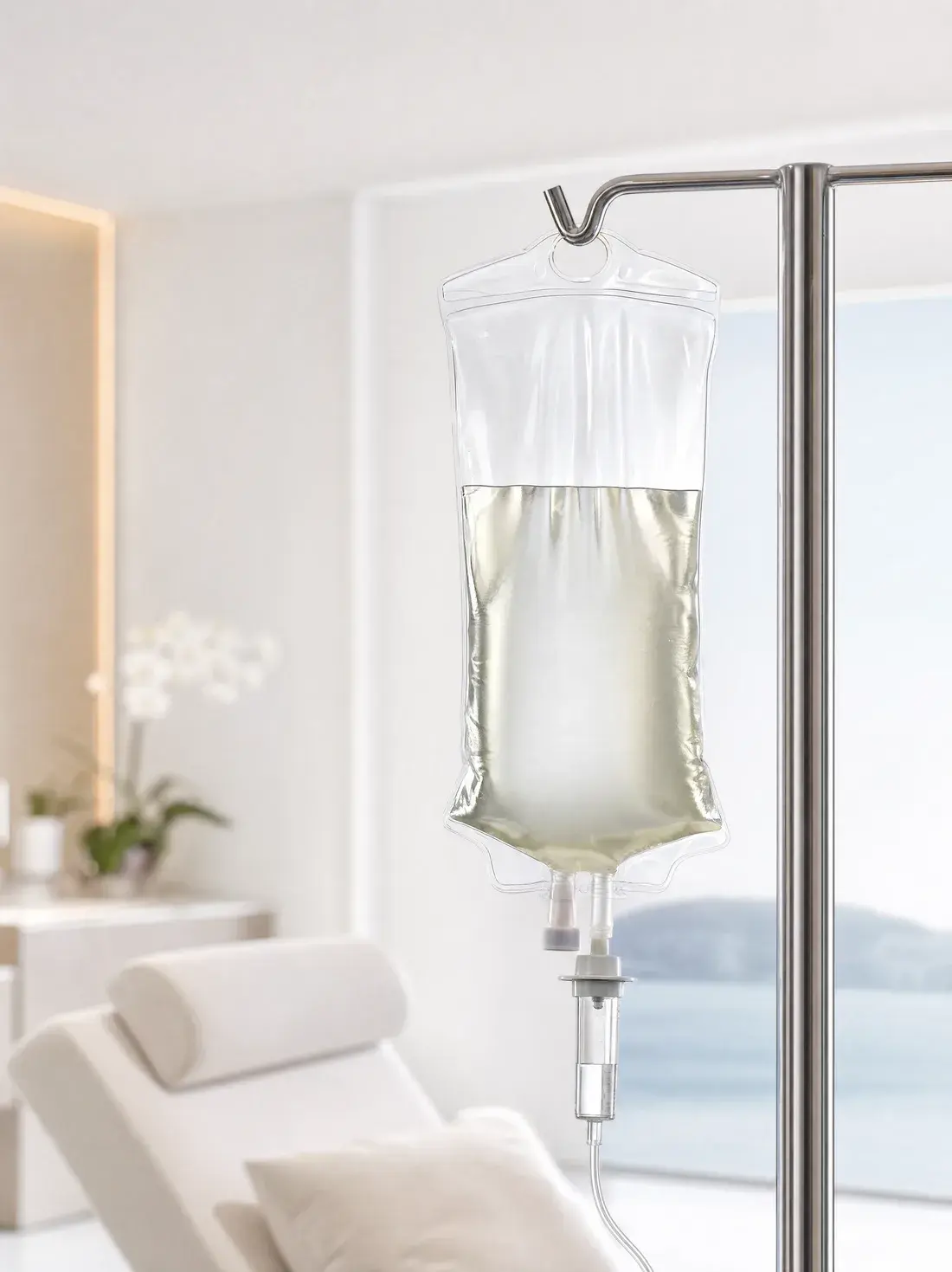
IV therapy delivers fluids, vitamins, minerals, amino acids and other compounds directly into the bloodstream through a small cannula in the arm. Because the infusion bypasses the digestive system, nutrients reach the circulation at full concentration, which is useful where oral absorption is limited or where rapid rehydration is the goal.
In a medical setting, IV therapy is a clinical treatment. The contents of the drip, the dose and the infusion rate are decided by a doctor based on your health status, and the session is delivered by qualified staff with medical oversight. That distinction, between a considered clinical protocol and an off-the-shelf cocktail, is the single most important thing to understand before booking anything.
Does IV Therapy Really Work?
It depends entirely on what you are asking it to do. For rehydration and for correcting identified deficiencies, intravenous delivery is well established medicine. If blood testing shows low iron, vitamin D or B12, an infusion protocol may restore levels more quickly and reliably than oral supplements, particularly where gut absorption is compromised.
For general wellness claims, the honest picture is more measured. Research on vitamin drips in healthy people with normal nutrient levels is limited, and marketing that sells a drip as a guaranteed boost to energy or immunity runs ahead of the evidence. Many clients do report feeling better after a session, commonly less fatigue and better recovery, but responses vary from person to person, and some of what is attributed to the vitamins is simple rehydration.
This is exactly why testing first matters. A drip chosen because your bloodwork shows a specific need has a clear rationale. A drip chosen from a menu because its name sounds appealing does not. The principle is explored further in the case for measuring before treating, which underpins how our doctors approach every wellness treatment.
What Types of IV Therapy Are Available?
Most medical IV programmes in Dubai draw on a core set of protocols, adjusted to the individual:
- Hydration and recovery drips restore fluids and electrolytes after illness, travel, intense training or heat exposure, which Dubai summers make genuinely relevant.
- Vitamin and mineral infusions address documented deficiencies, most commonly vitamin D, B-complex vitamins, vitamin C, magnesium and zinc, and may support energy and immune function where levels are low.
- Amino acid and antioxidant infusions, including glutathione, are used within broader wellness and skin programmes, with evidence still developing.
- NAD+ infusions deliver a coenzyme central to cellular energy production, discussed in more detail below.
At Shookra the starting point is not the menu but the assessment. Bloodwork and a medical consultation come first, and the infusion protocol is built from what they show, then adjusted over follow-up as your results change. Treating a drip as part of a measured programme rather than a one-off purchase is what separates medical IV therapy from the wellness-bar version.
Who Might Benefit From IV Therapy?
The clients who tend to get the most from a properly run IV programme share a pattern: there is something identifiable to correct or a genuine demand on the body to support. That includes people with blood-test-confirmed deficiencies, frequent travellers dealing with disrupted routines, people recovering from illness, and those training hard in Dubai's heat where fluid and electrolyte losses are real. For these groups, the benefits are concrete and measurable.
Where the picture is murkier is the client who feels generally flat, low on energy or lacking vitality with no obvious cause. IV therapy is sometimes part of the answer there, but the more valuable step is finding out why. Persistent fatigue can reflect sleep, thyroid function, iron status, stress load or other factors that a drip alone will not address, and skin that has lost its glow often has the same underlying causes. This is where an assessment earns its place: it either identifies what the infusion should contain or shows that the answer is not an infusion at all.
What About NAD+ IV Therapy?
NAD+ (nicotinamide adenine dinucleotide) is a coenzyme found in every cell in the body, essential to energy metabolism and cellular repair. Its levels decline with age, which has made restoring NAD+ one of the most researched ideas in longevity science, and NAD+ drips one of the most requested infusions in Dubai.
The evidence deserves honest framing. Laboratory and early human research on NAD+ precursors is genuinely promising, particularly around cellular energy and metabolic function, but large clinical trials in healthy adults are still limited. NAD+ infusions are best understood as an evidence-informed longevity intervention rather than a proven treatment for any condition, and they are one component of a longevity strategy, never the whole of it.
Practically, these appointments are longer than standard drips, often two to four hours, because the infusion rate needs to be slow to stay comfortable. At Shookra, NAD+ therapy sits within our longevity programmes under the oversight of Dr. Hassan Hamdan, our General Practitioner for regenerative and longevity medicine, and is typically paired with baseline and follow-up testing so its place in your programme is reviewed against data rather than impressions.
Is IV Therapy Safe? Side Effects to Know About
Delivered by qualified medical staff with proper screening, IV therapy is generally well tolerated. Common side effects are minor and short-lived: bruising or soreness at the cannula site, a feeling of coolness during the infusion, occasionally a metallic taste or flushing. These typically resolve on their own.
Less common but more important risks include vein irritation, infection at the insertion site, allergic reactions and fluid overload, which is why screening matters. Clients with kidney disease, heart conditions or certain other medical histories need specific medical review before any infusion, and some infusions are unsuitable during pregnancy. High-dose vitamin infusions can also interact with some medications and conditions, another reason a doctor should review your history first.
The practical safety checklist for choosing a provider in Dubai is short: a DHA-licensed facility, a doctor consultation before your first infusion, pharmaceutical-grade ingredients, qualified staff placing and monitoring the drip, and clear protocols if anything feels wrong during a session.
Clinic or Home IV Therapy in Dubai?
Home drip services are popular in Dubai, and for simple rehydration delivered by a licensed provider they can be a reasonable convenience. The trade-offs are worth understanding. A clinic setting offers full emergency equipment and staff on hand, easier sterile technique, and, most importantly, the infrastructure for the medical side: consultation rooms, phlebotomy for baseline bloodwork and follow-up testing.
Our view is straightforward: the further a drip moves from hydration towards genuinely medical protocols such as high-dose vitamins or NAD+, the stronger the case for a clinic environment. Shookra's clinic in Business Bay is set up so that testing, treatment and review happen in one place, which is what a diagnostics-led programme requires.
What Does an IV Therapy Session Involve?
Your first visit starts with a consultation, a review of your medical history and, in most cases, blood testing. Once your protocol is agreed, the appointment itself is straightforward: a cannula is placed, the infusion runs for anywhere between 30 minutes and a few hours depending on the contents, and you can read or work throughout. Most clients return to their day immediately afterwards.
For a client's-eye view of a session from arrival to aftercare, our clinical team has written a companion piece on what to expect from medical-grade IV therapy. Frequency is individual: some clients attend around a training block or travel schedule, others follow a structured programme with periodic re-testing to confirm the protocol is still earning its place.
How Much Does IV Therapy Cost in Dubai?
Prices in Dubai vary widely, driven by the contents of the infusion, the dose, the setting and the medical oversight included. Simple hydration drips sit at the accessible end; NAD+ and specialised protocols cost more because the ingredients and session times are substantially greater. Be cautious at both extremes: unusually cheap drips raise questions about ingredient quality and supervision, while a high price does not by itself mean a protocol is right for you.
We confirm costs transparently at consultation once your protocol is clear, including any bloodwork, so there are no surprises. What we do not do is sell infusions without knowing whether you need them.
Why Choose Shookra for IV Therapy in Dubai?
Shookra is a DHA-licensed regenerative aesthetics and longevity clinic in Business Bay, and IV therapy here works the way the rest of our medicine works: assess, treat, monitor, adjust. Bloodwork before protocols. Doctors, not menus, deciding contents. Follow-up testing to confirm results rather than assume them. Our wellness infusions sit alongside full diagnostics and screening, so if your reason for wanting a drip is persistent fatigue or low resilience, we can investigate the cause rather than only treating the symptom.
If you are considering IV therapy in Dubai, book a consultation in Business Bay. We will test first, tell you honestly what you need, and build the protocol around your results.
Frequently Asked Questions
How much does an IV drip cost in Dubai?
Costs vary with the infusion contents, dose, session length and the medical oversight included, from accessible hydration drips to more substantial NAD+ protocols. Reputable clinics confirm pricing at consultation once your protocol is agreed. At Shookra, costs including any bloodwork are confirmed transparently before treatment begins.
Does IV therapy really work?
For rehydration and correcting tested deficiencies, intravenous treatment is established medicine. For general wellness in people with normal nutrient levels, evidence is more limited and responses vary. Results are most reliable when the protocol is chosen from your blood results rather than from a menu, which is why testing comes first.
What are the side effects of an IV drip?
Most side effects are minor: bruising or soreness at the needle site, coolness during the infusion, occasionally flushing or a metallic taste. Rarer risks include vein irritation, infection and allergic reaction. Medical screening beforehand, qualified staff and a licensed facility keep these risks low and well managed.
How long does an IV therapy session take?
Standard vitamin and hydration drips typically run 30 to 60 minutes. NAD+ infusions are slower, usually two to four hours, because comfort depends on a gradual rate. Including consultation and setup, allow slightly longer for a first visit, which at Shookra also includes your medical review.
How often should you have IV therapy?
There is no universal schedule. Frequency depends on your test results, goals and response, ranging from occasional sessions around travel or training to structured programmes with periodic re-testing. A protocol should be reviewed against follow-up bloodwork rather than repeated indefinitely on assumption.
Want this for your own biology?
Speak with our team on WhatsApp — we’ll point you to the right protocol, or to a measurement first.